
Beyond the Book: Digital Research, Presentation, and Sustainability
The workshop was a great success. Thank you to everyone who came, presented, and took part in the discussions.
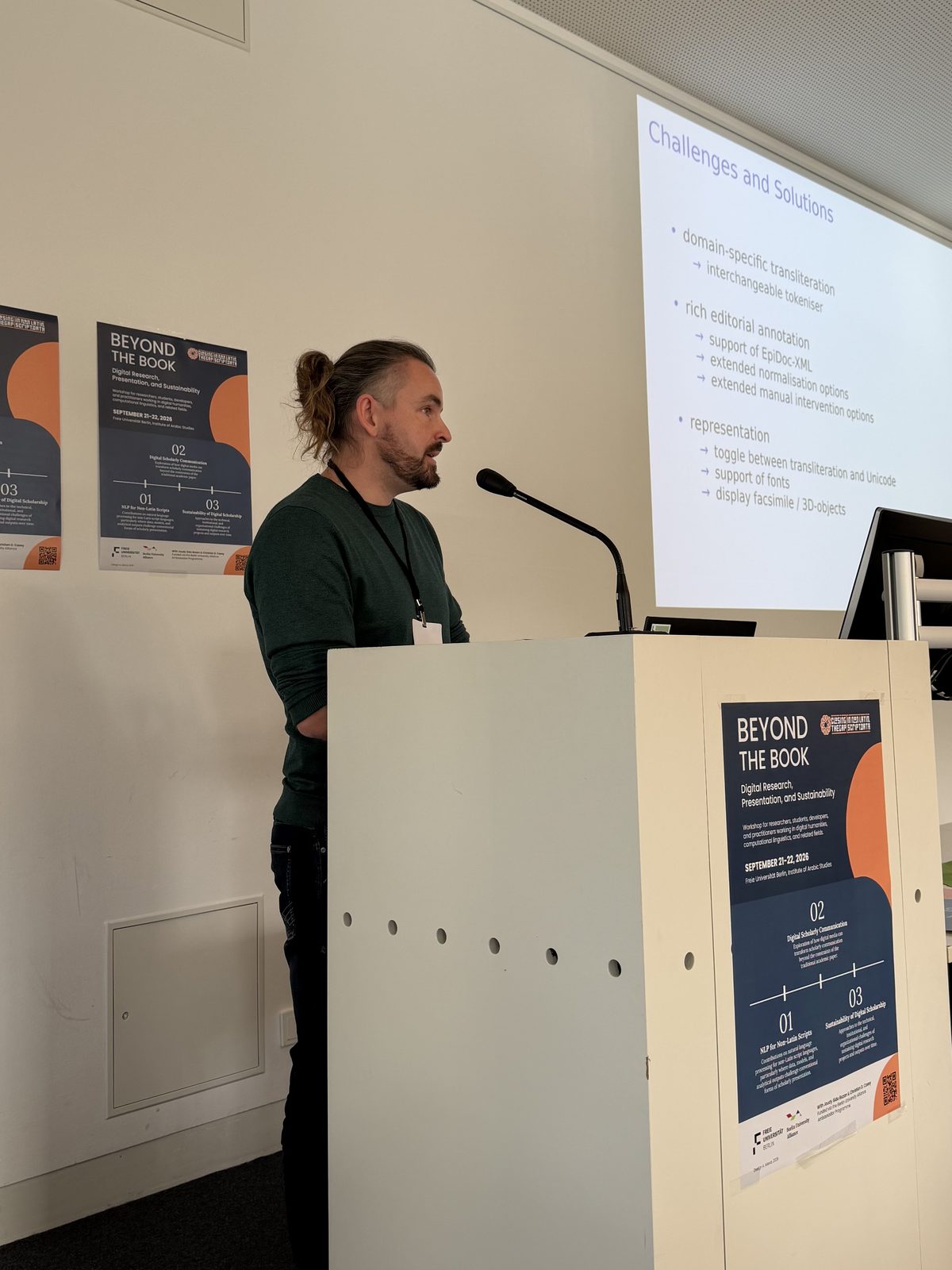
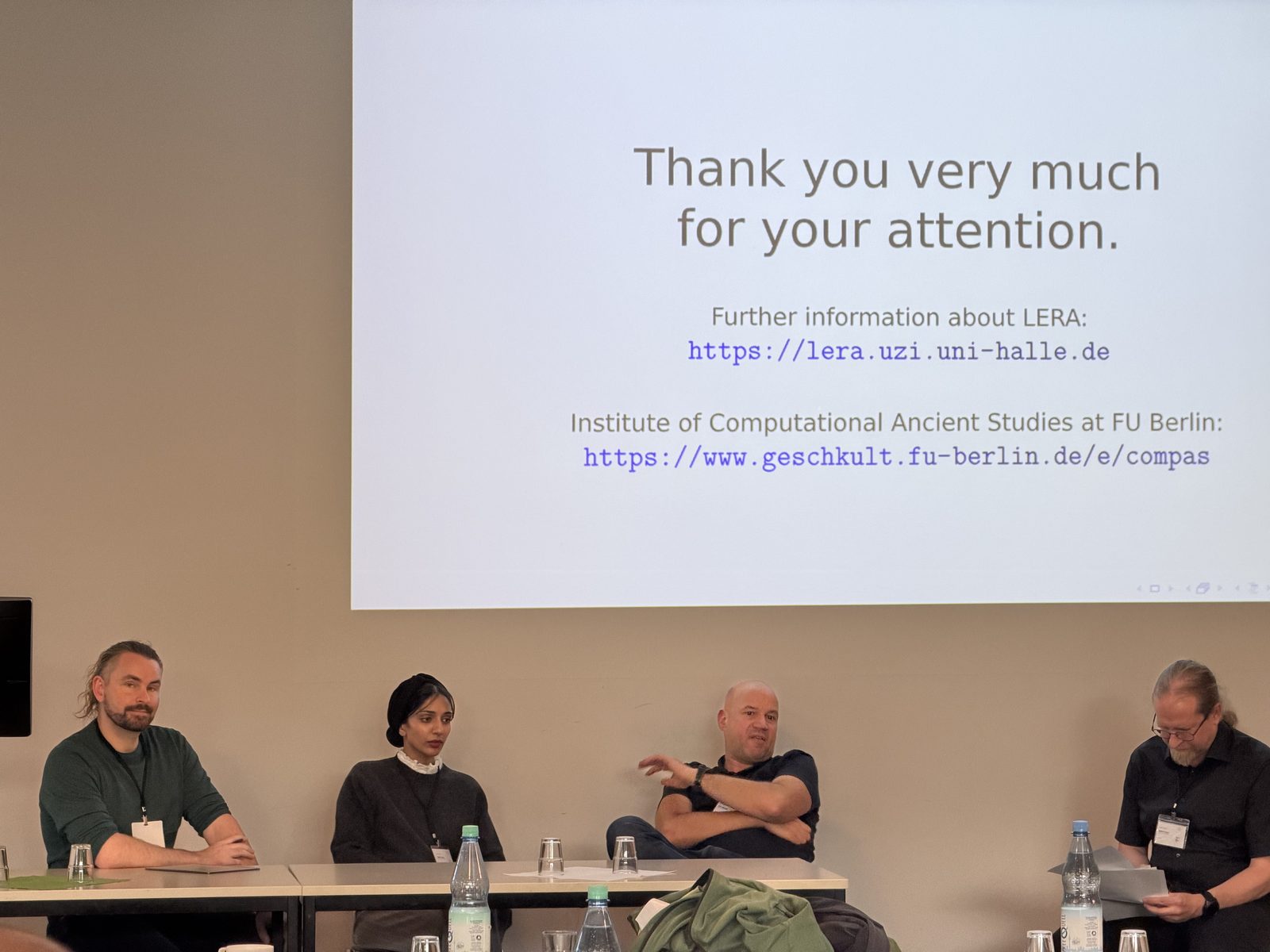
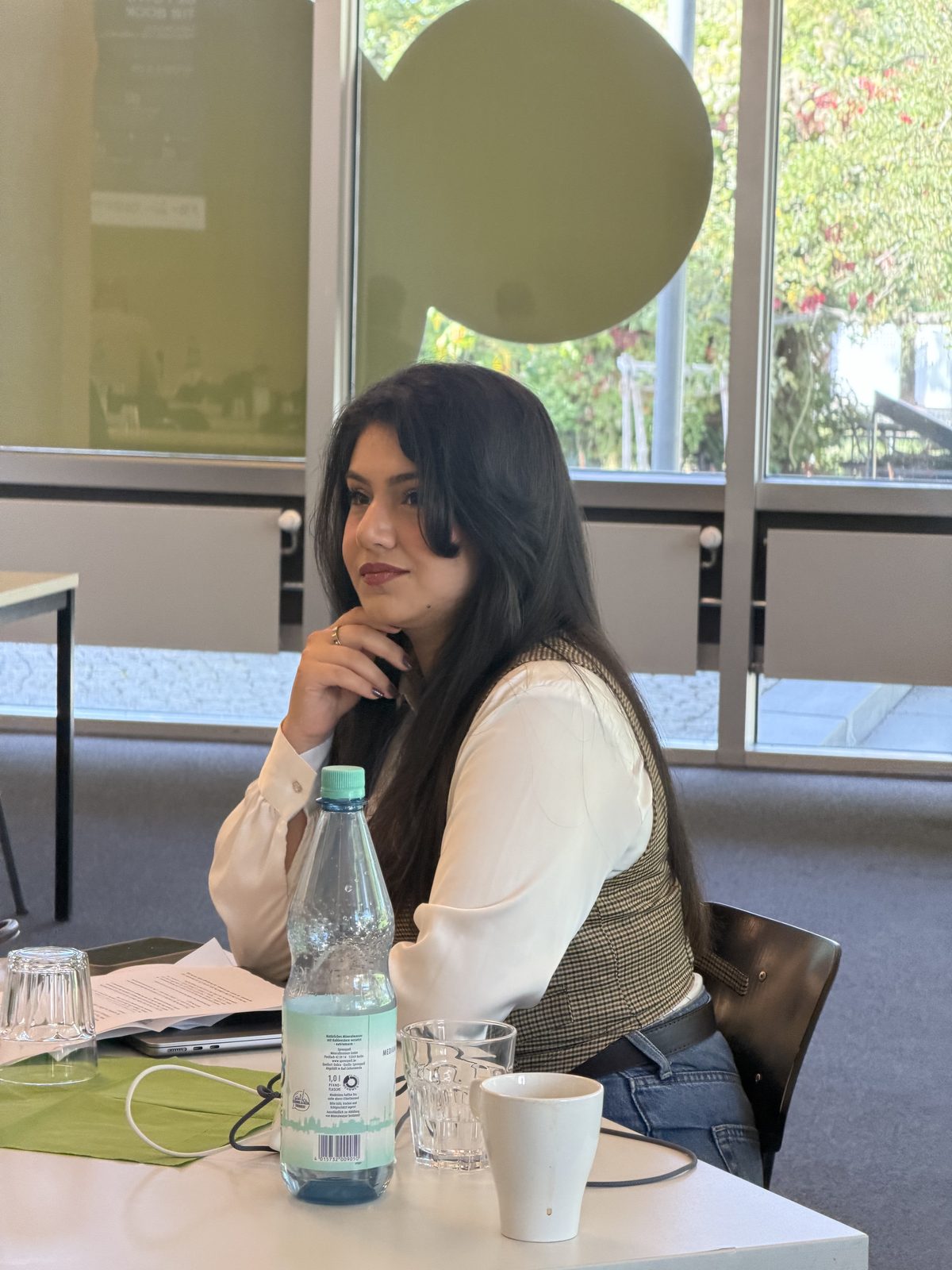
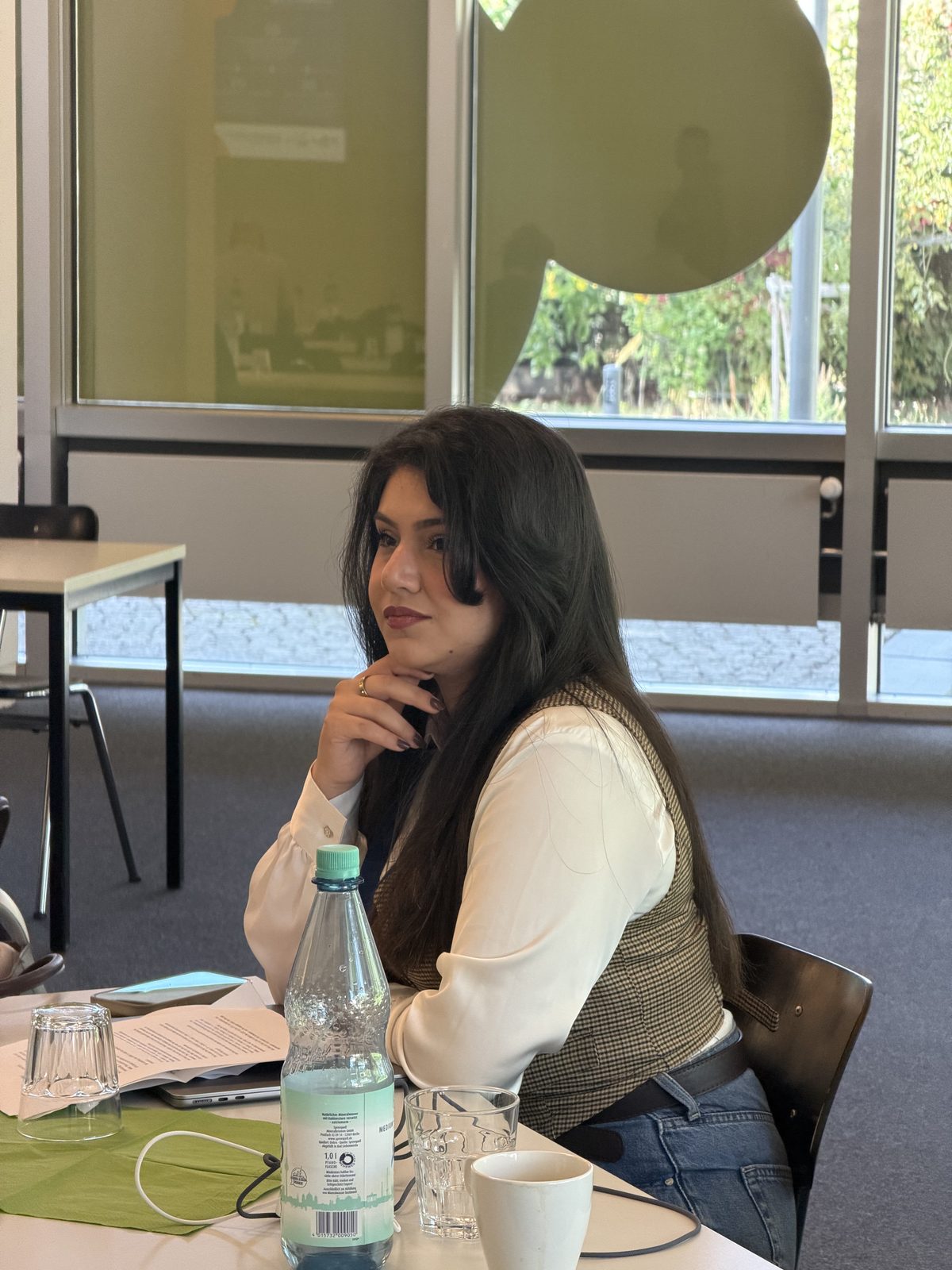
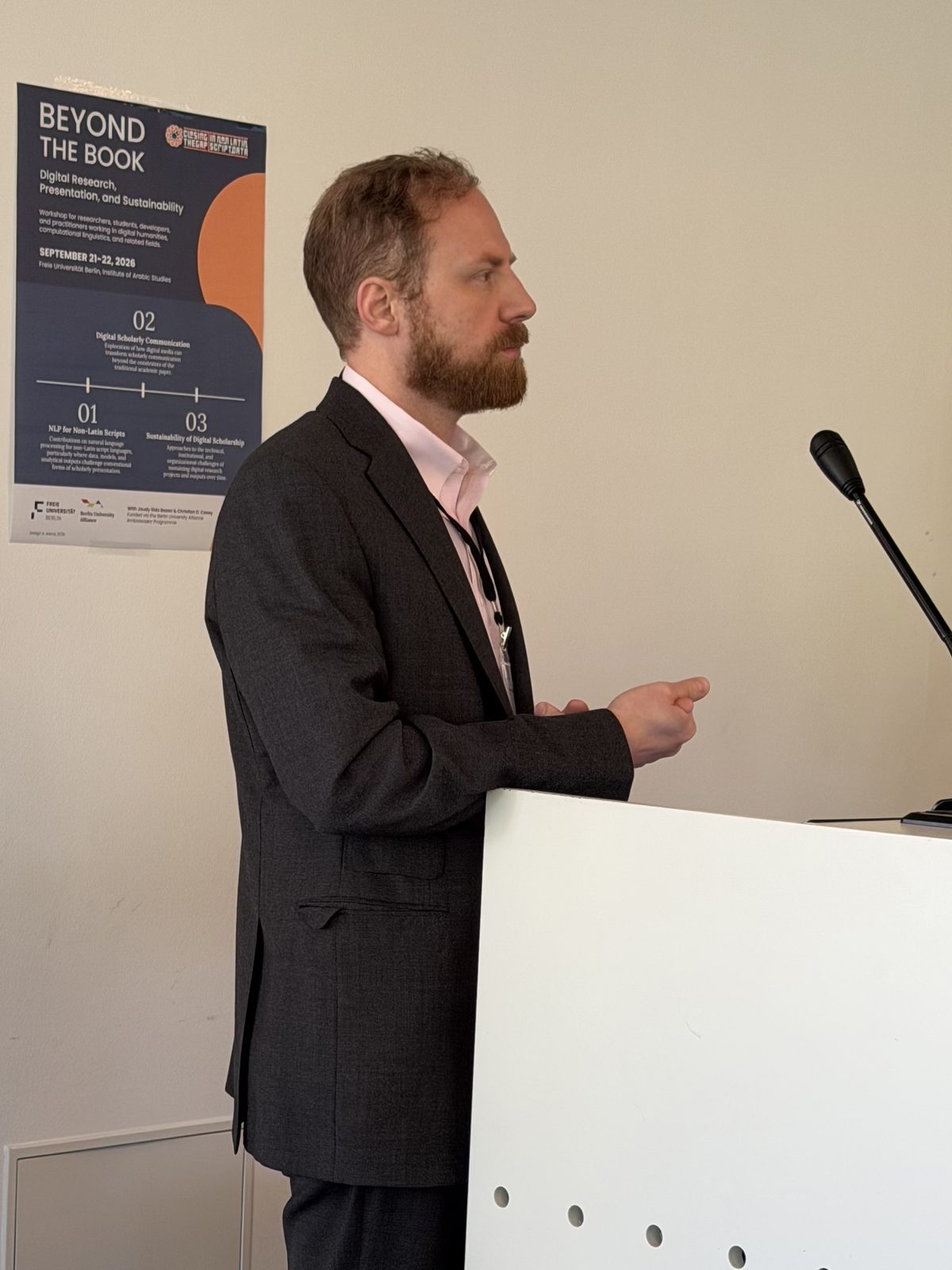
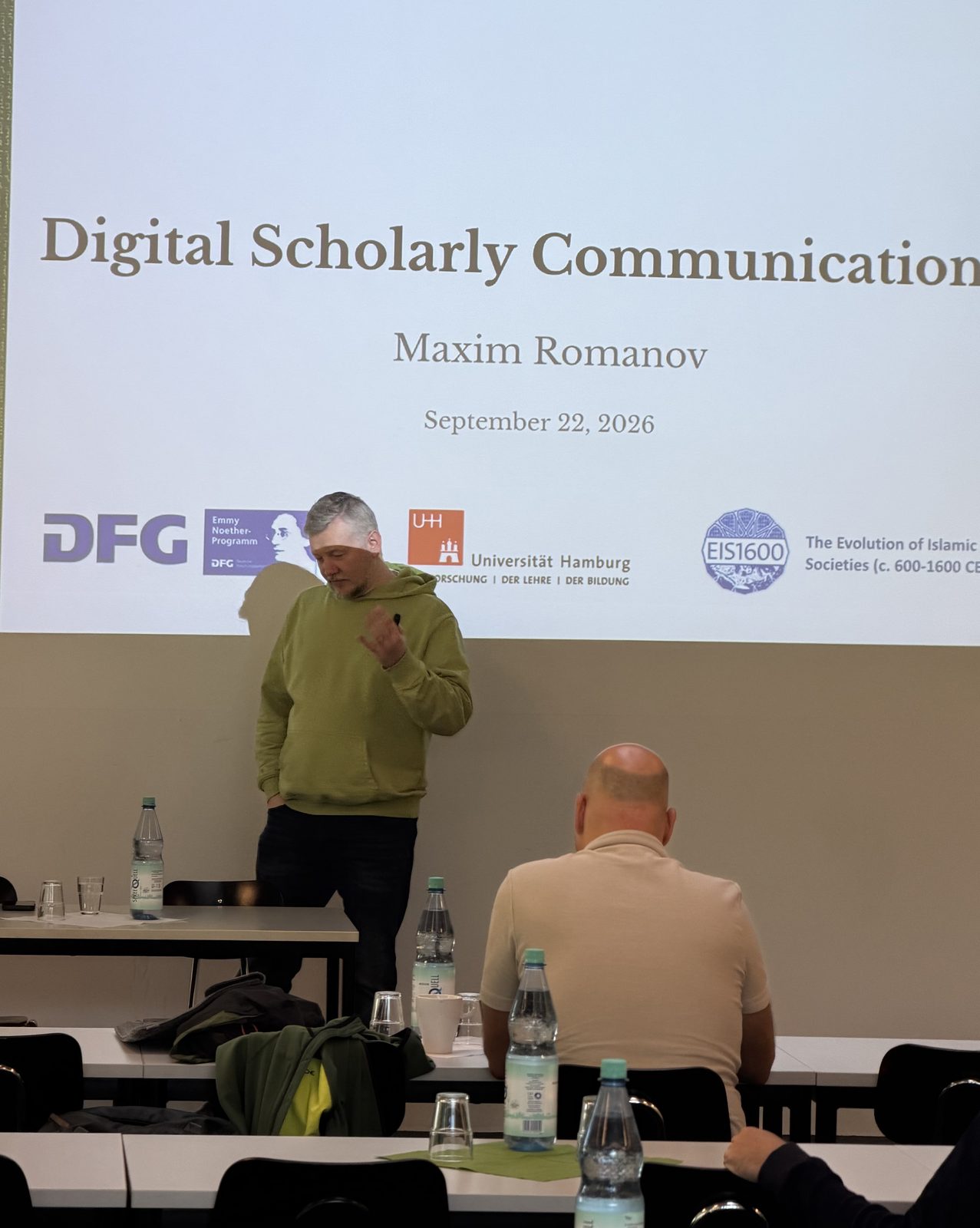
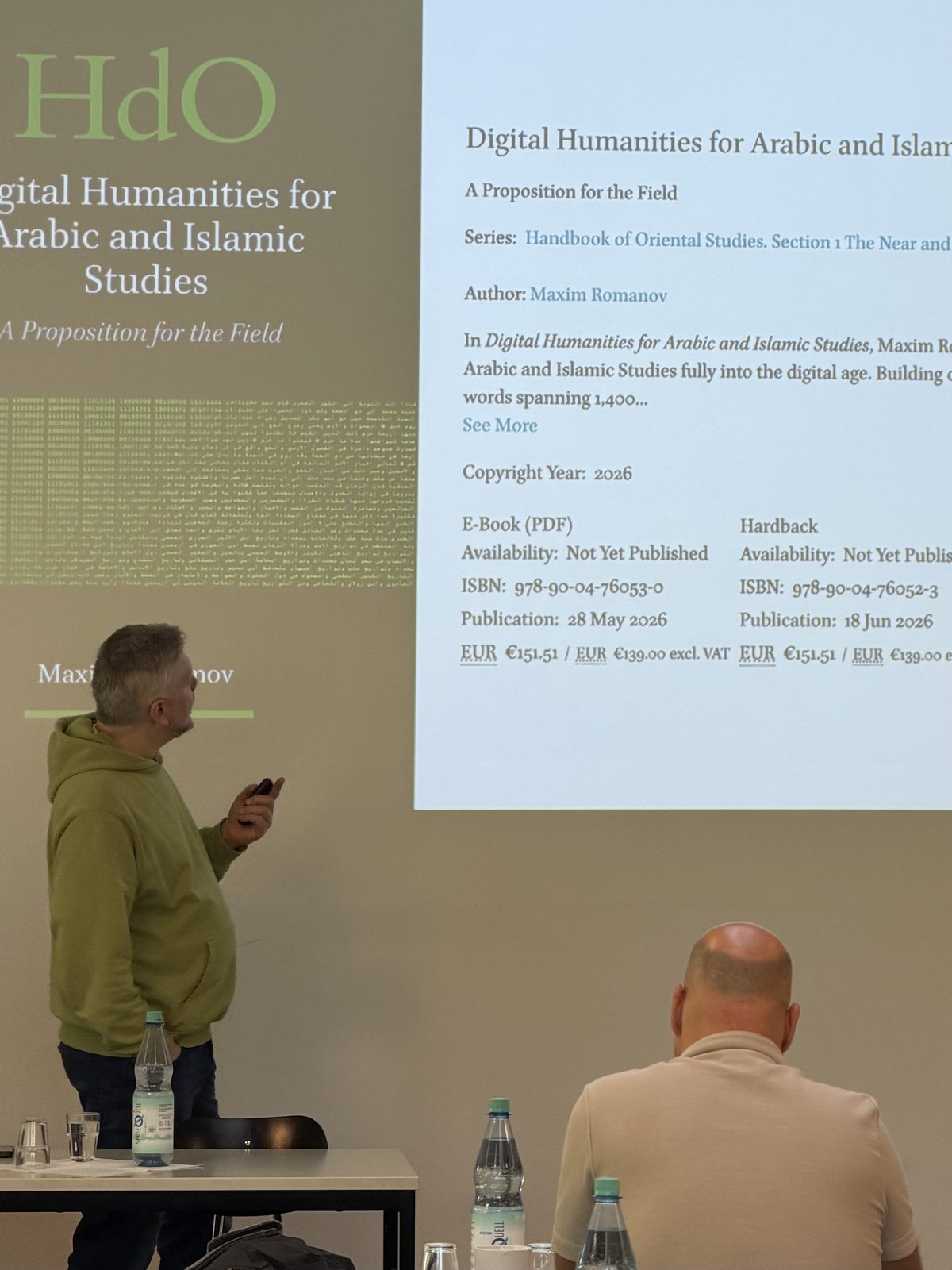
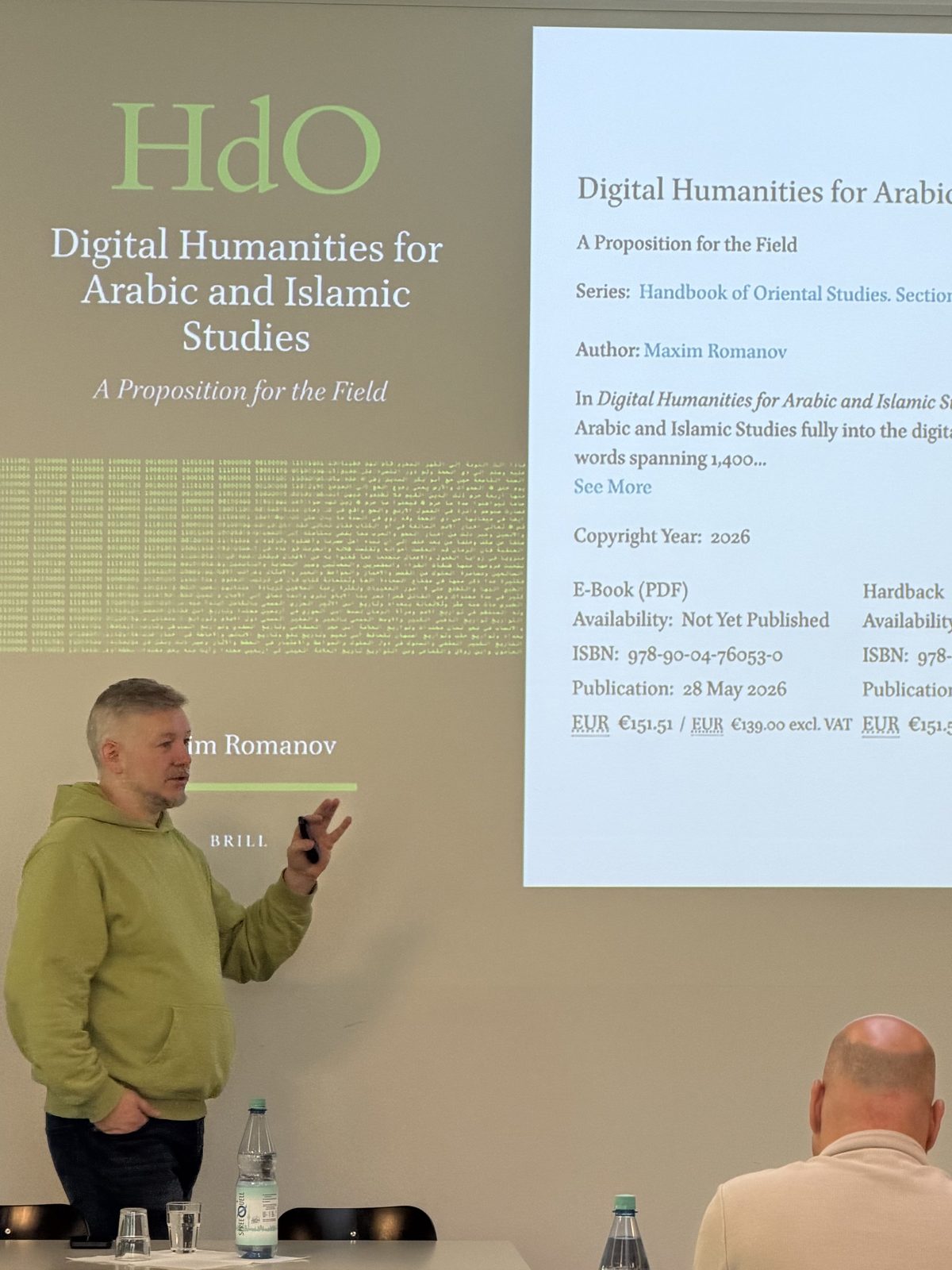
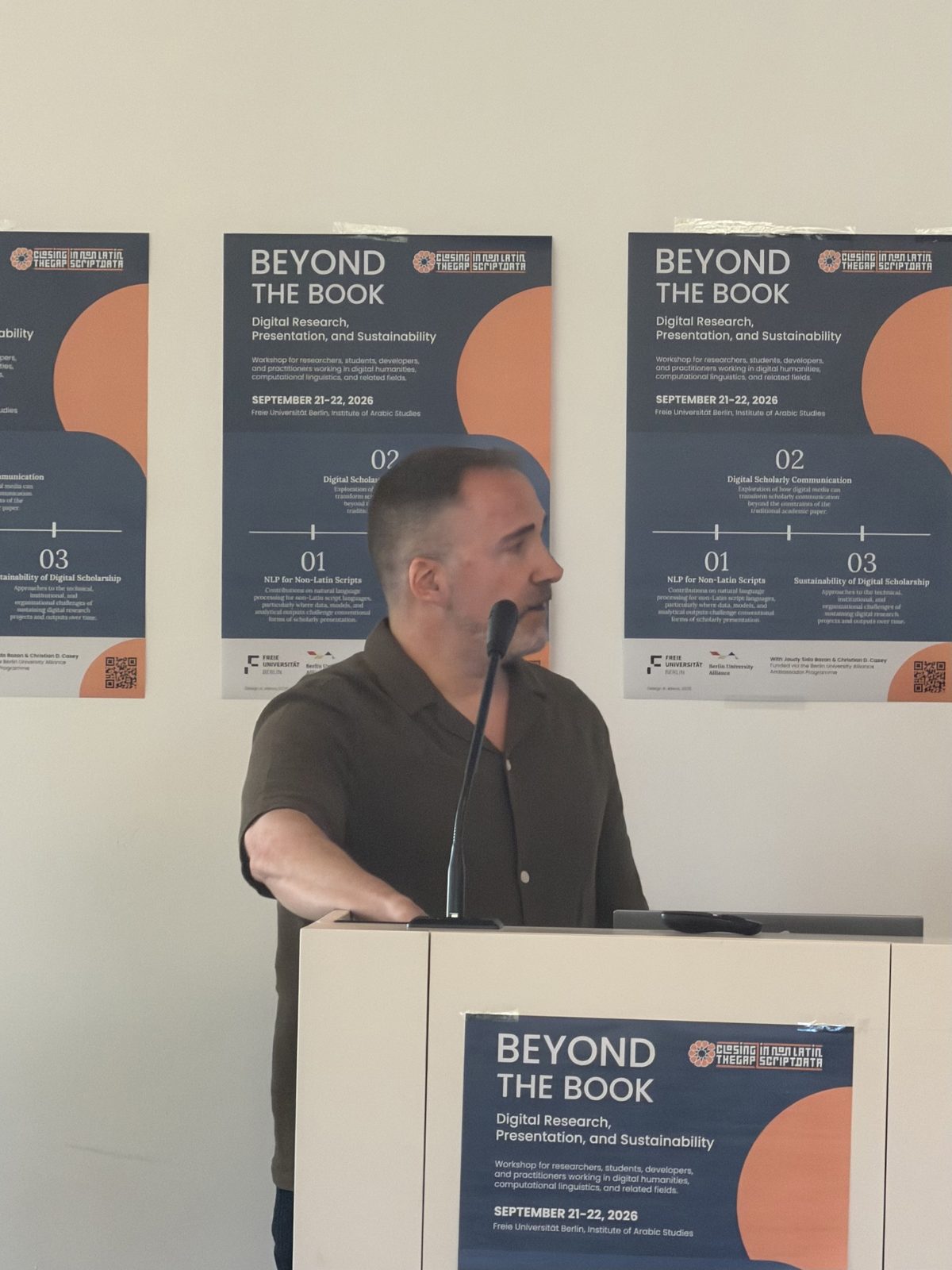
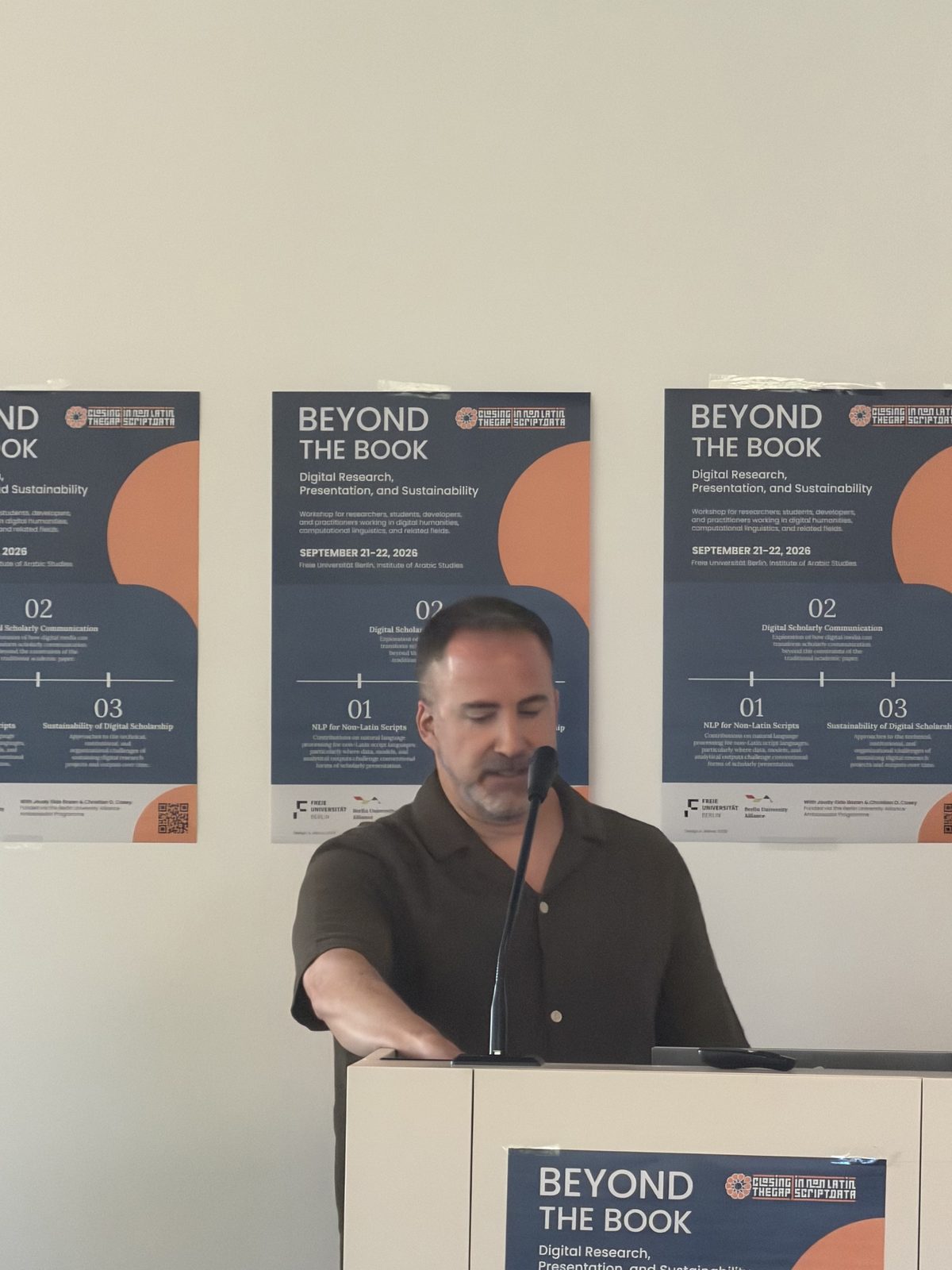
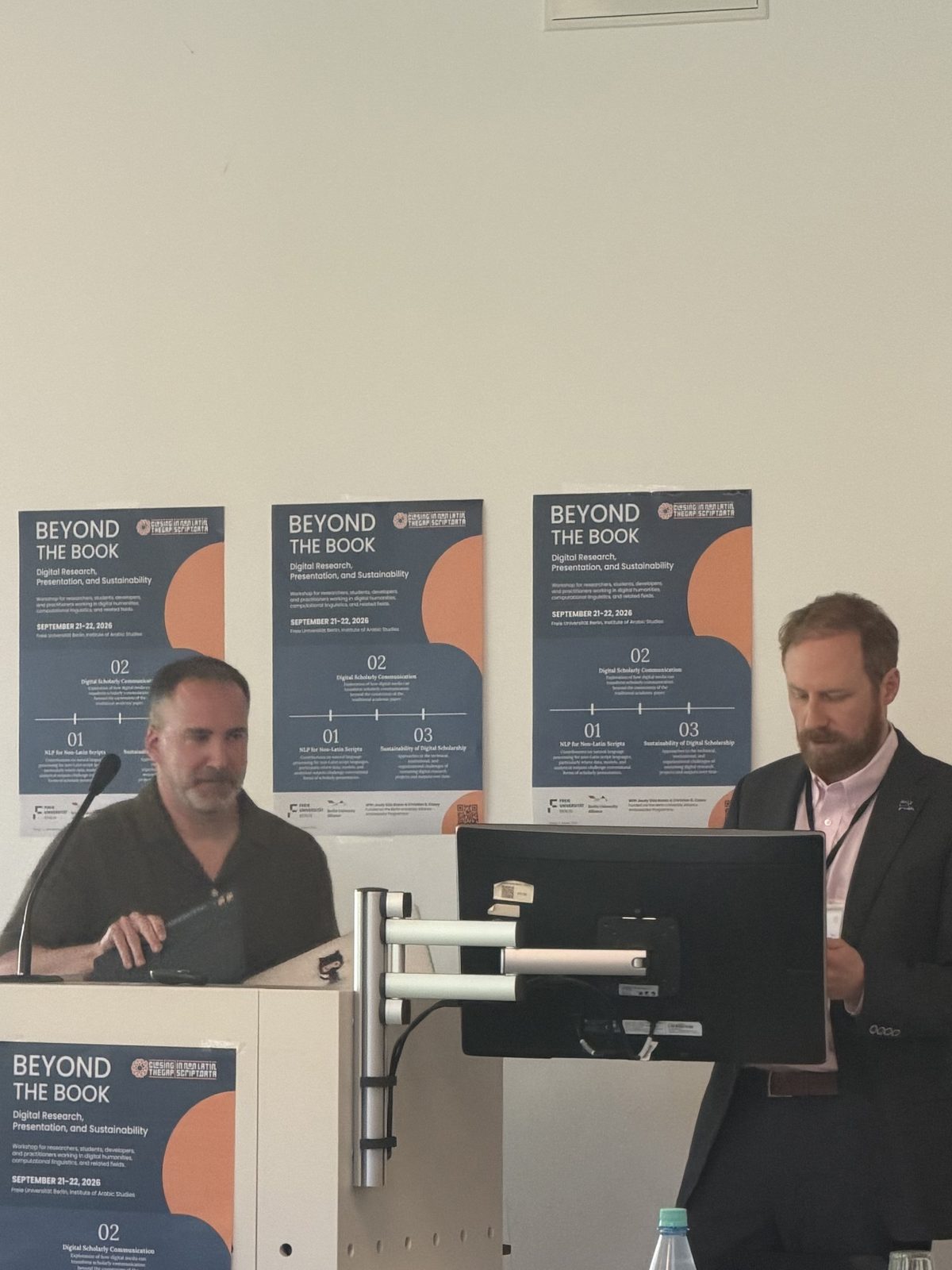
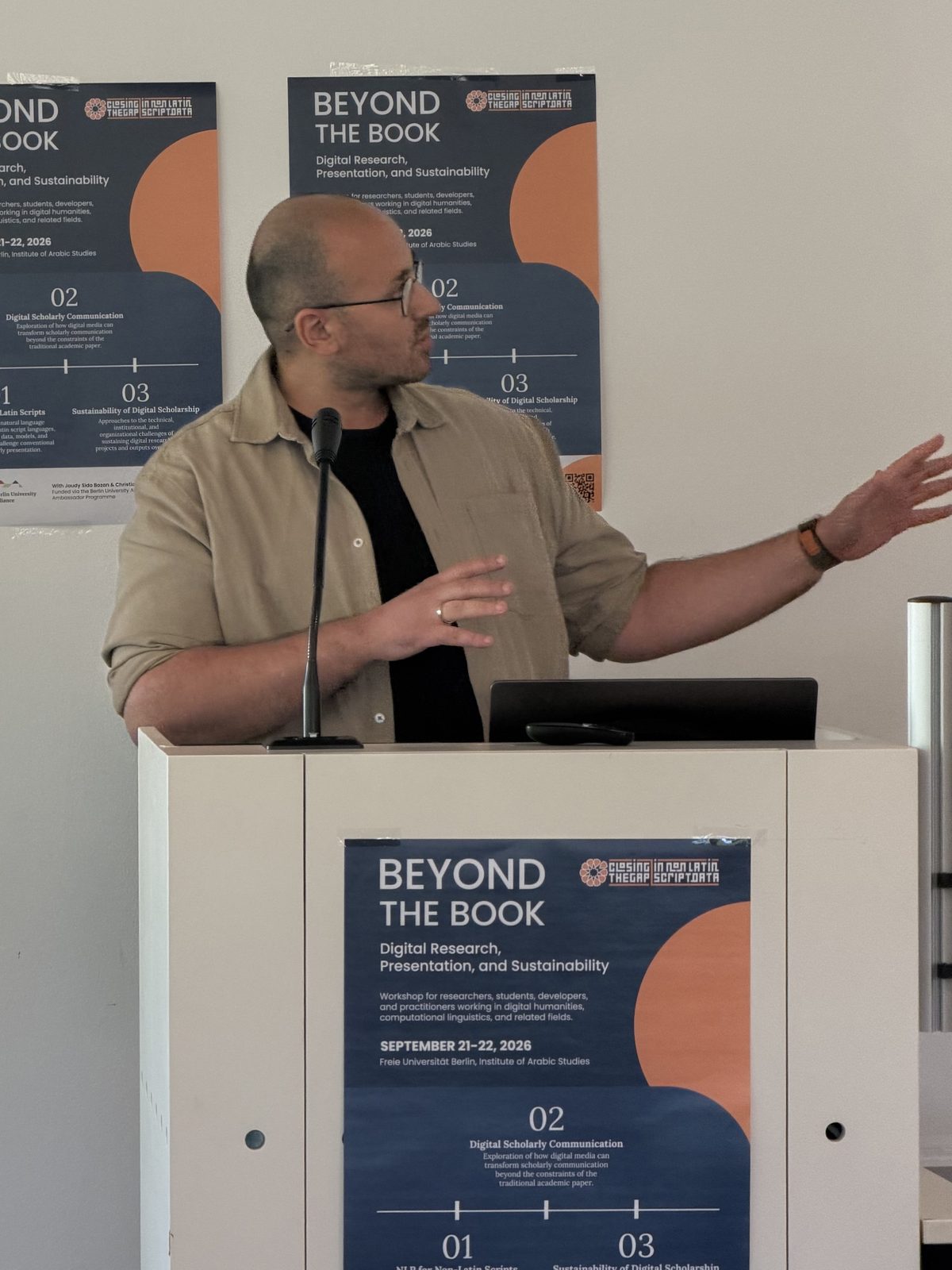
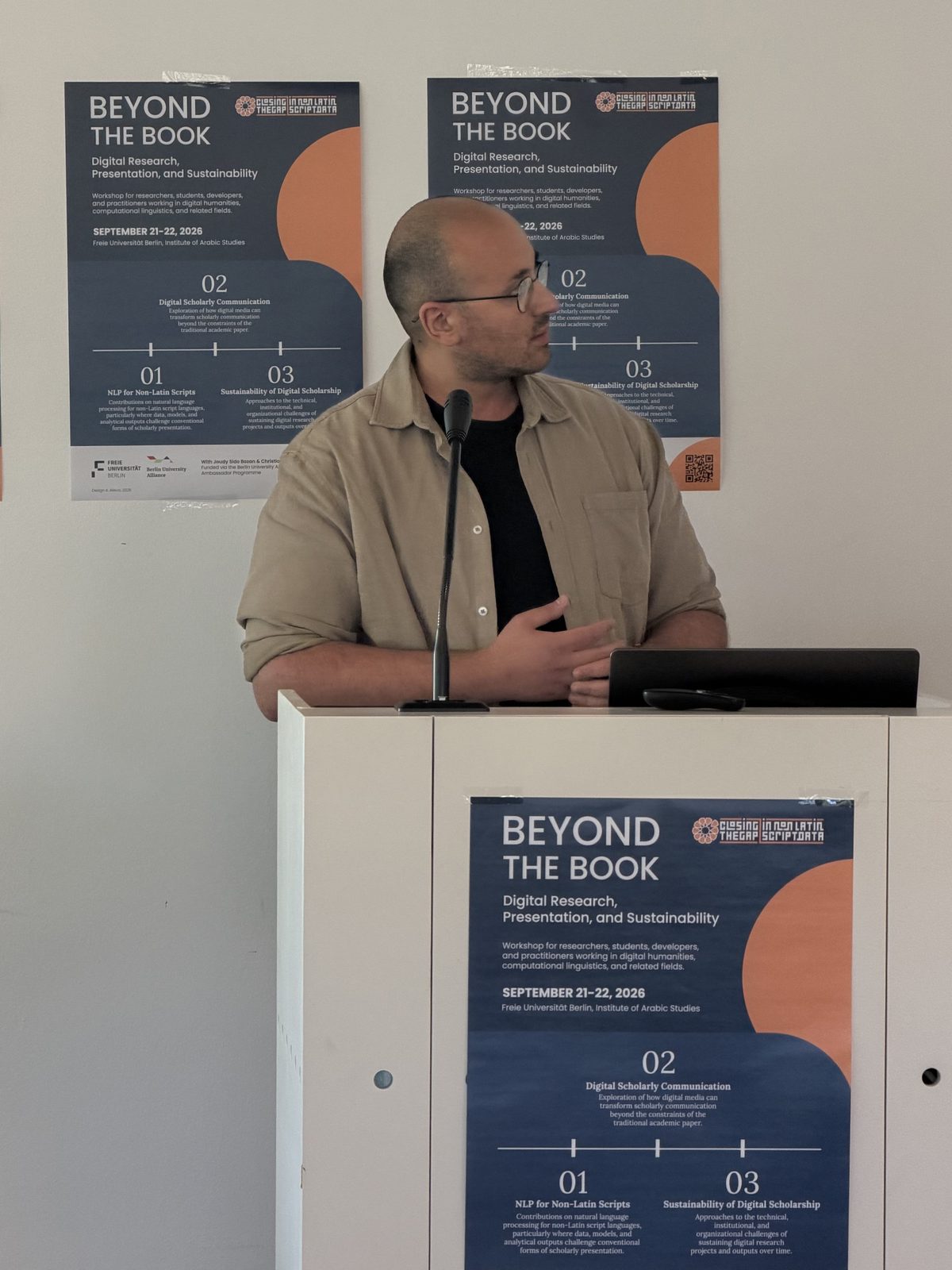
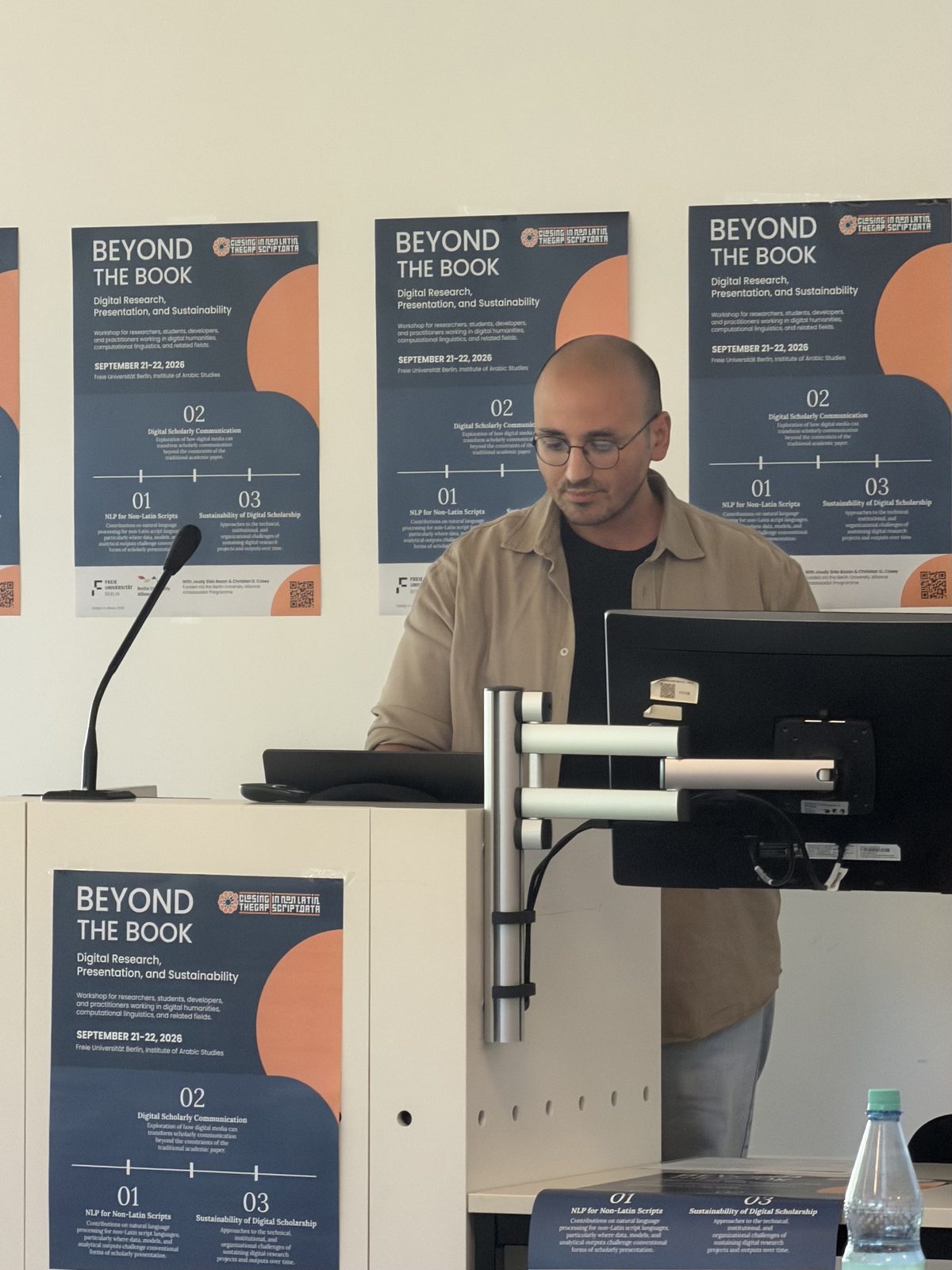
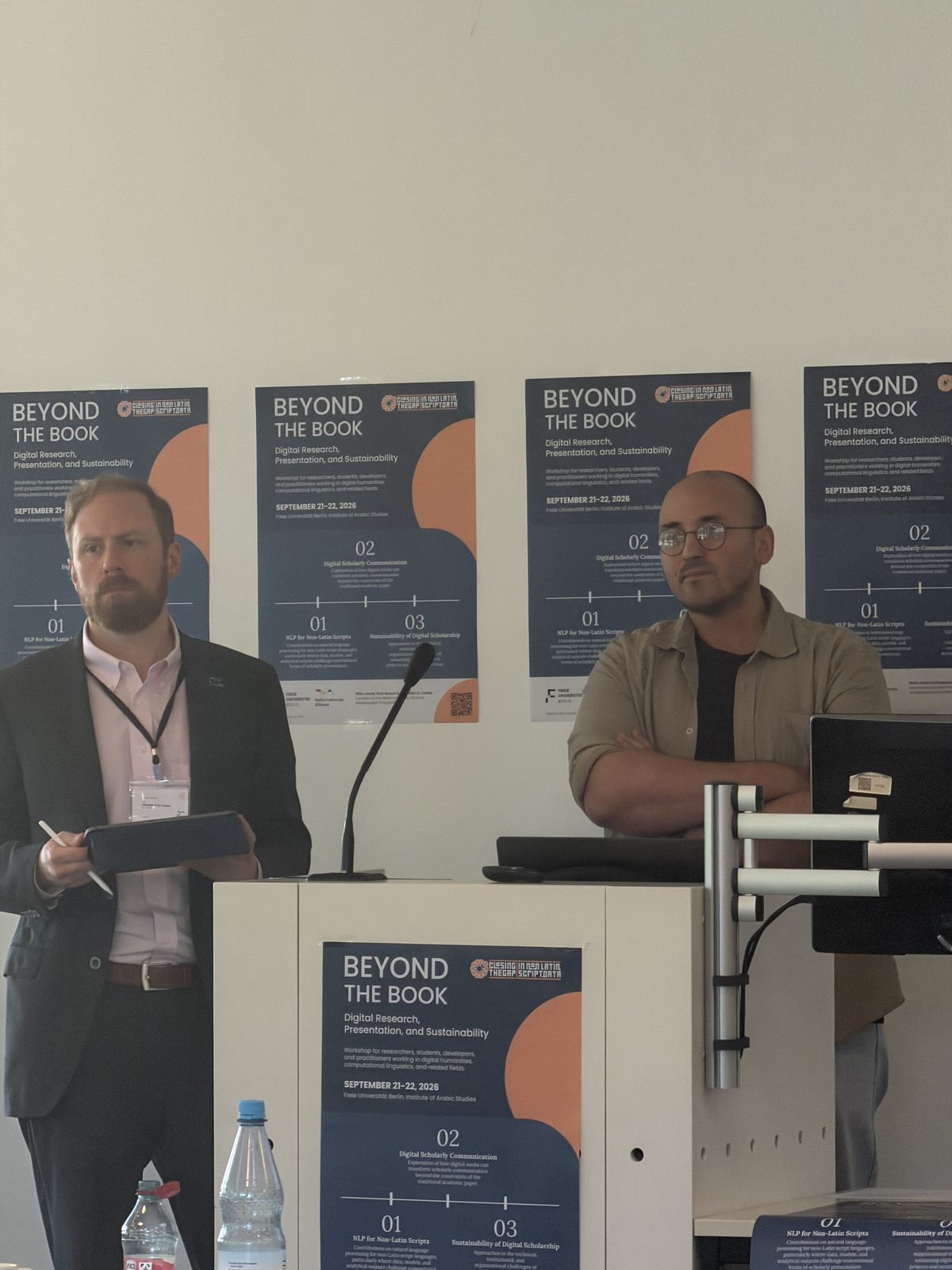
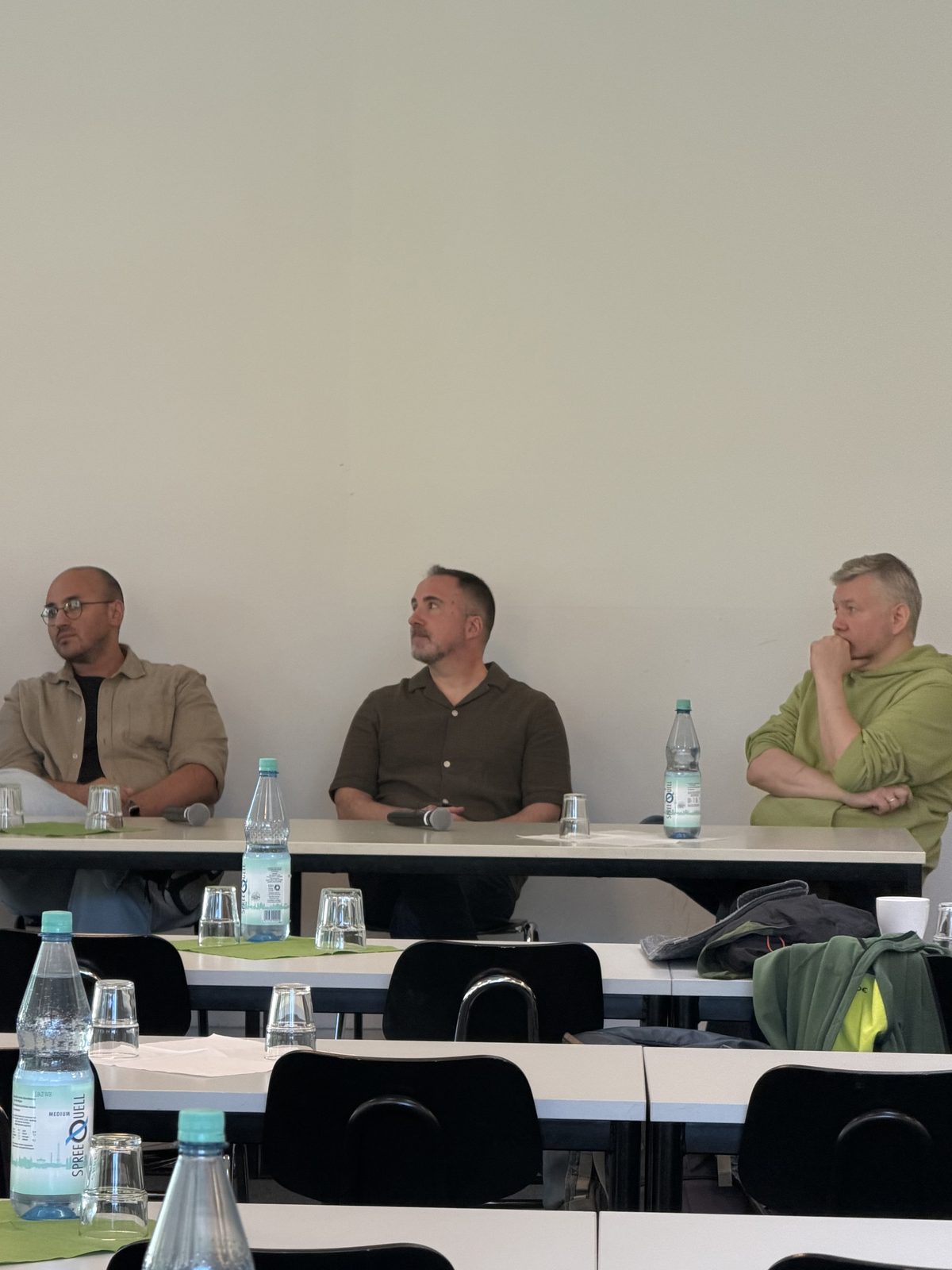
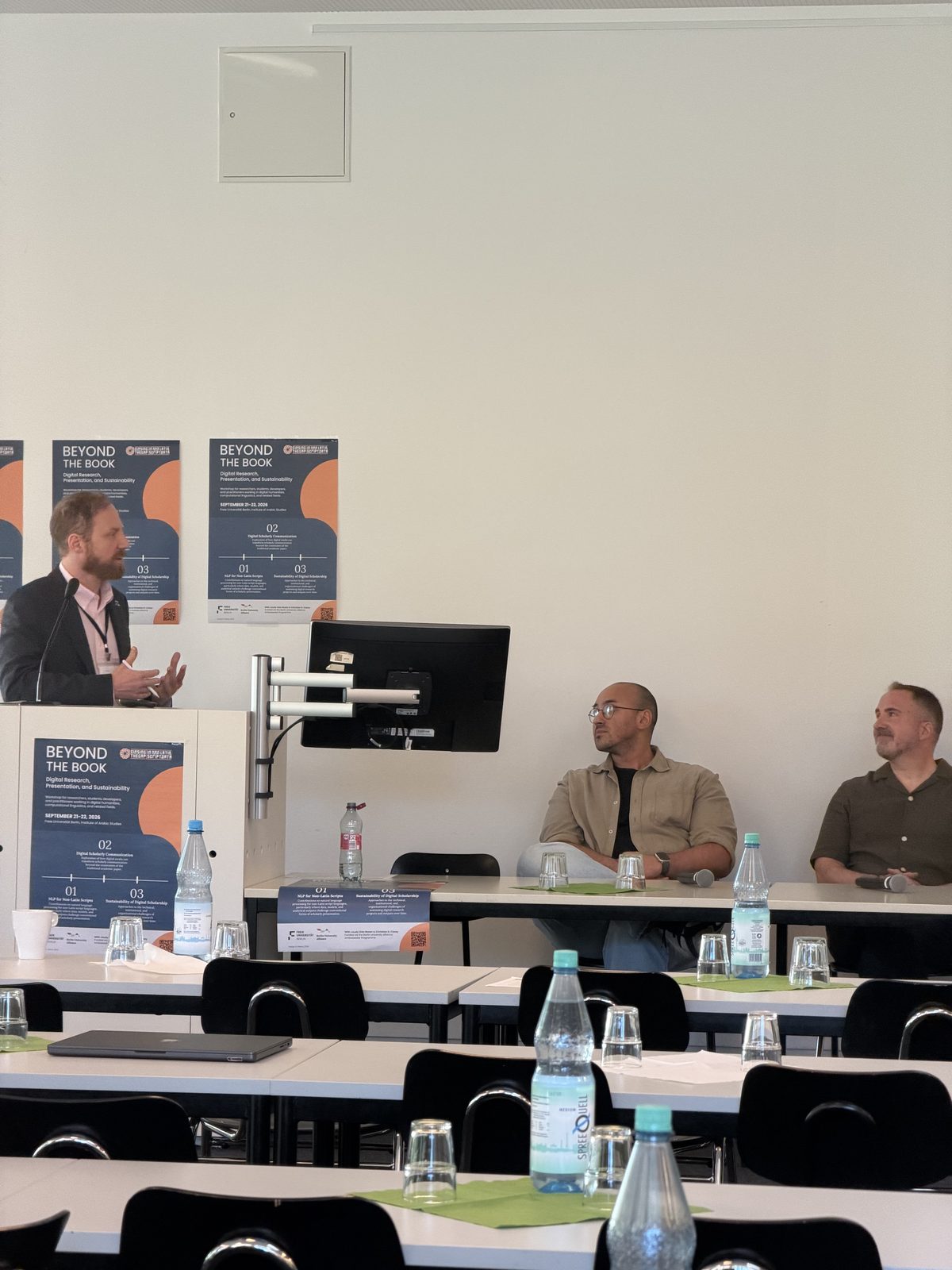
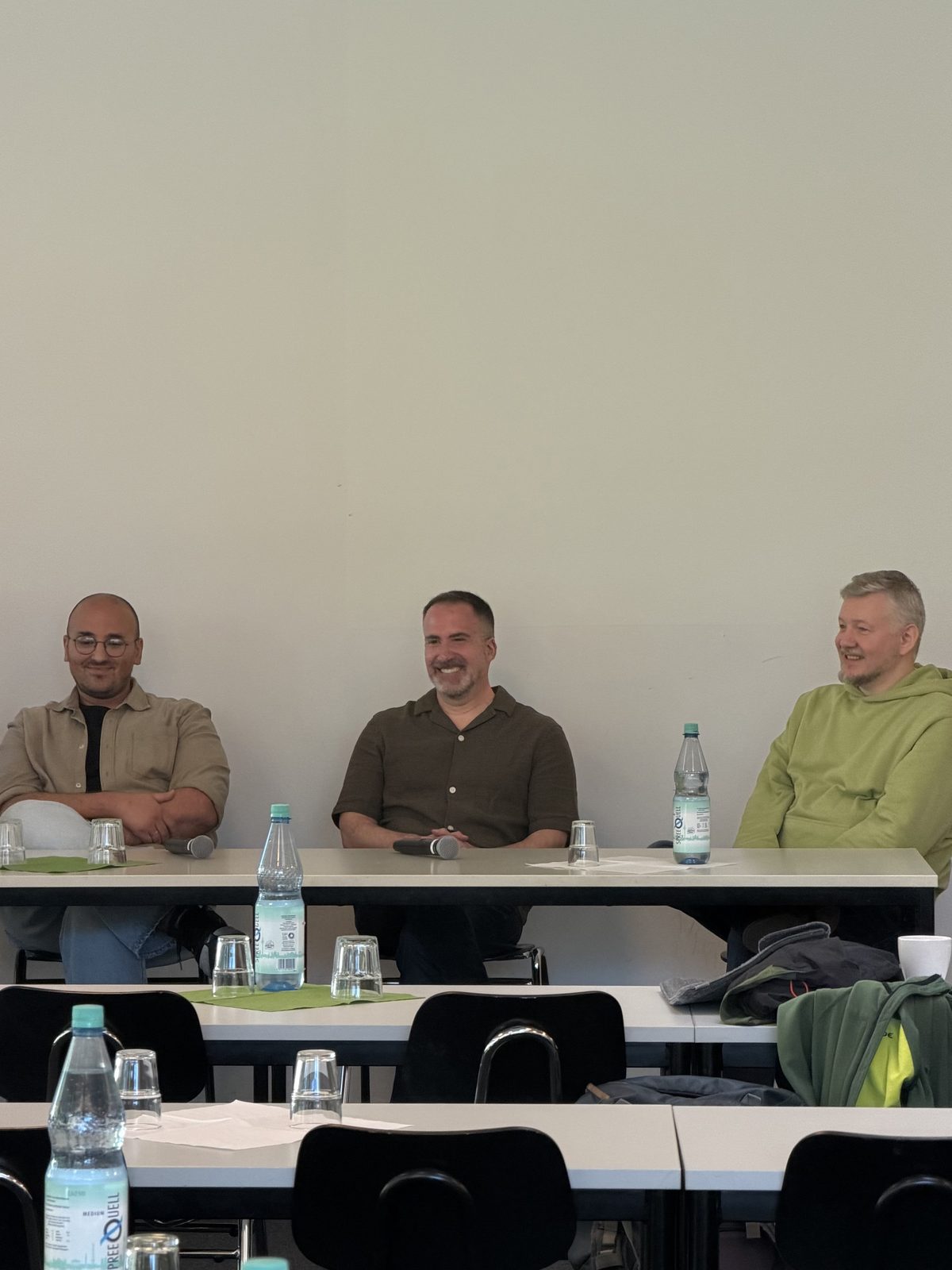
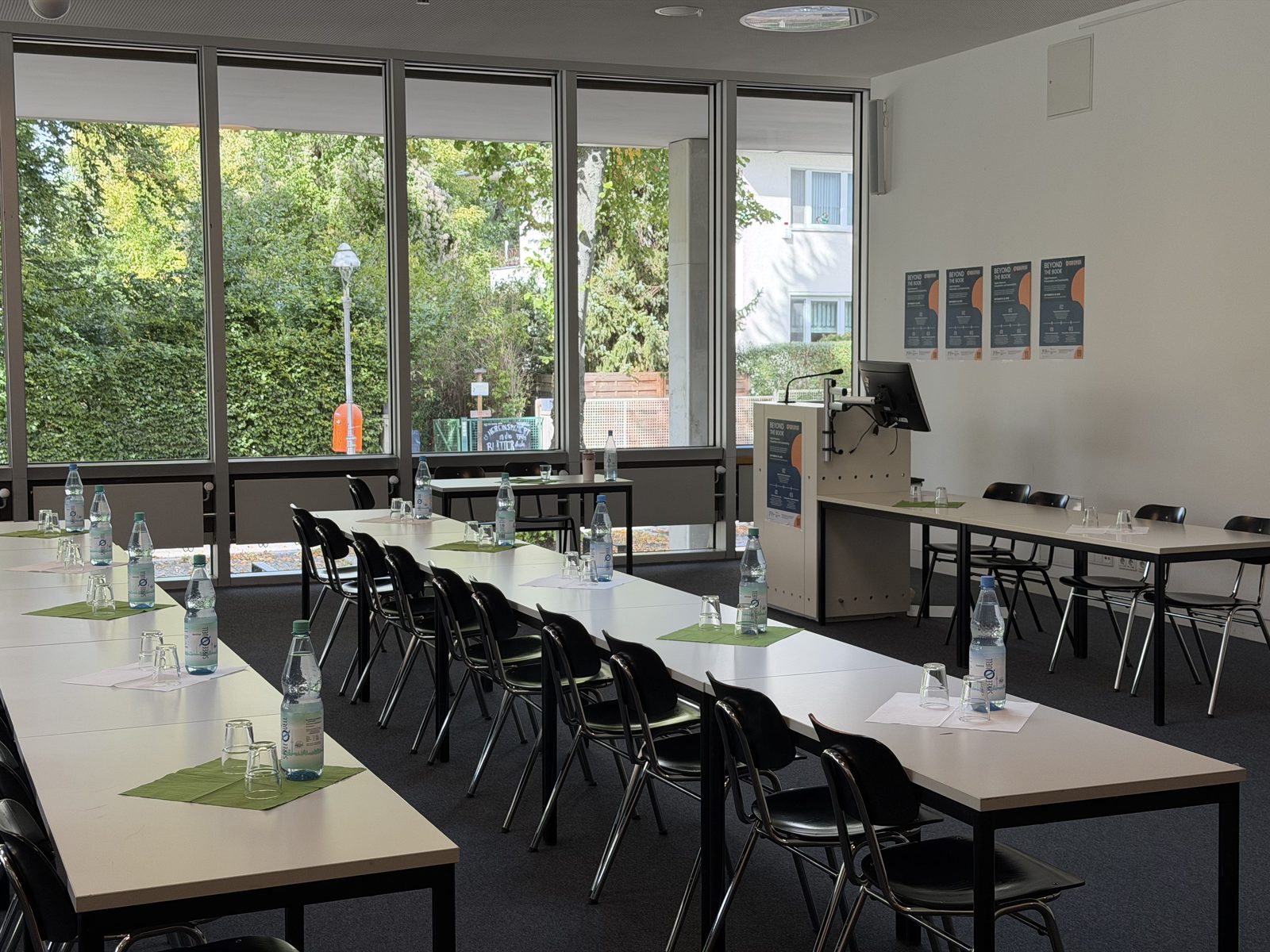
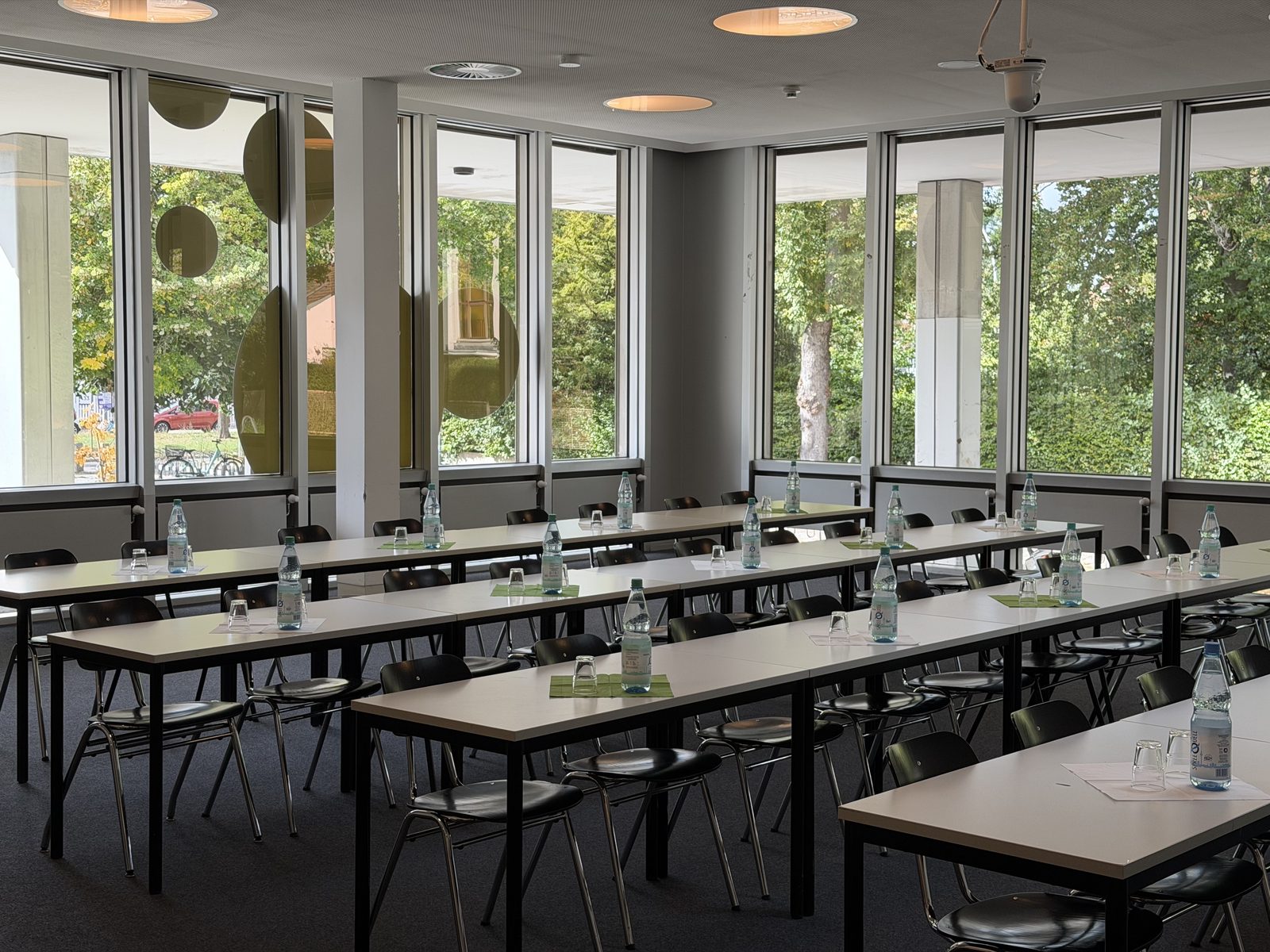
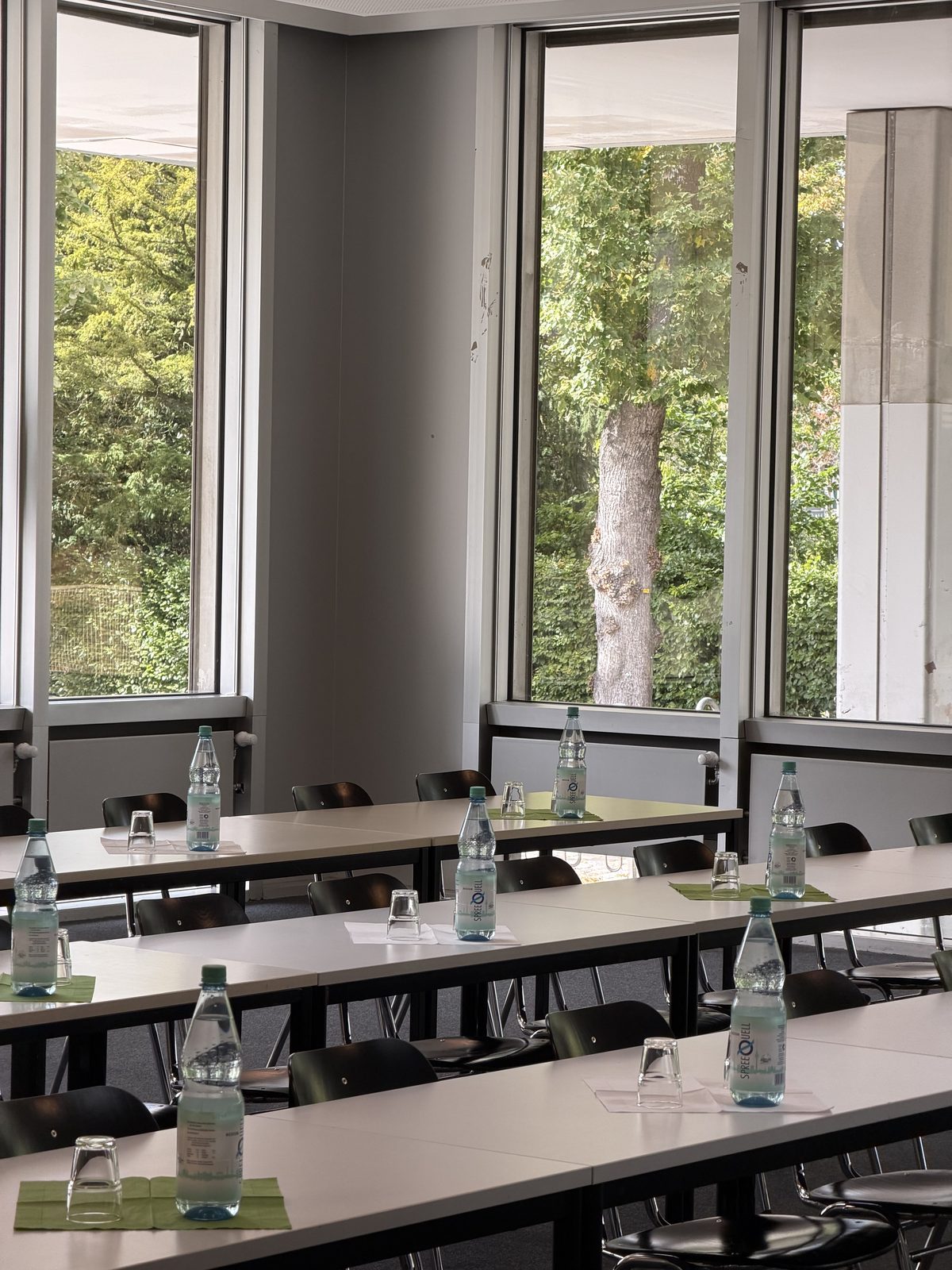
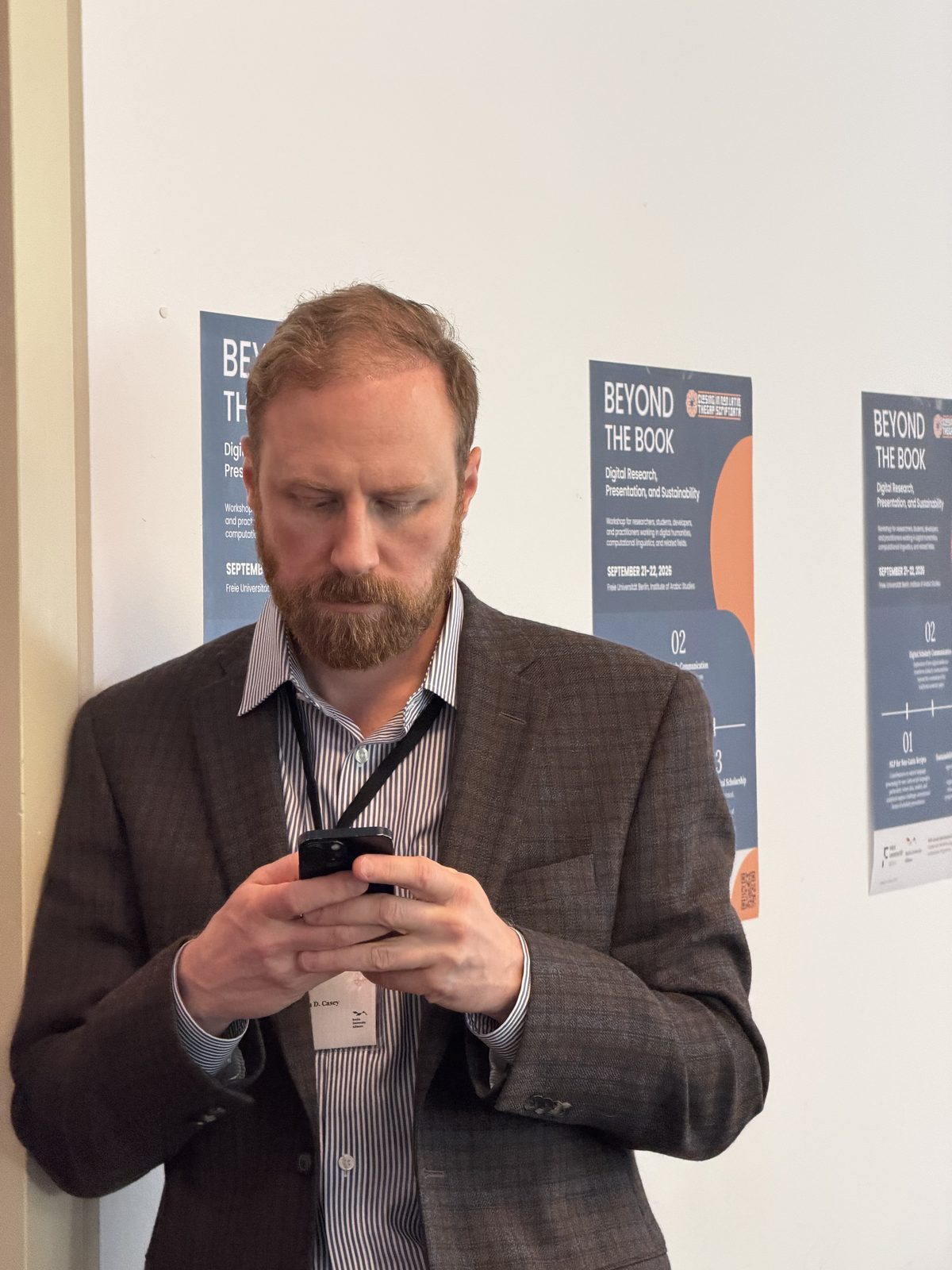
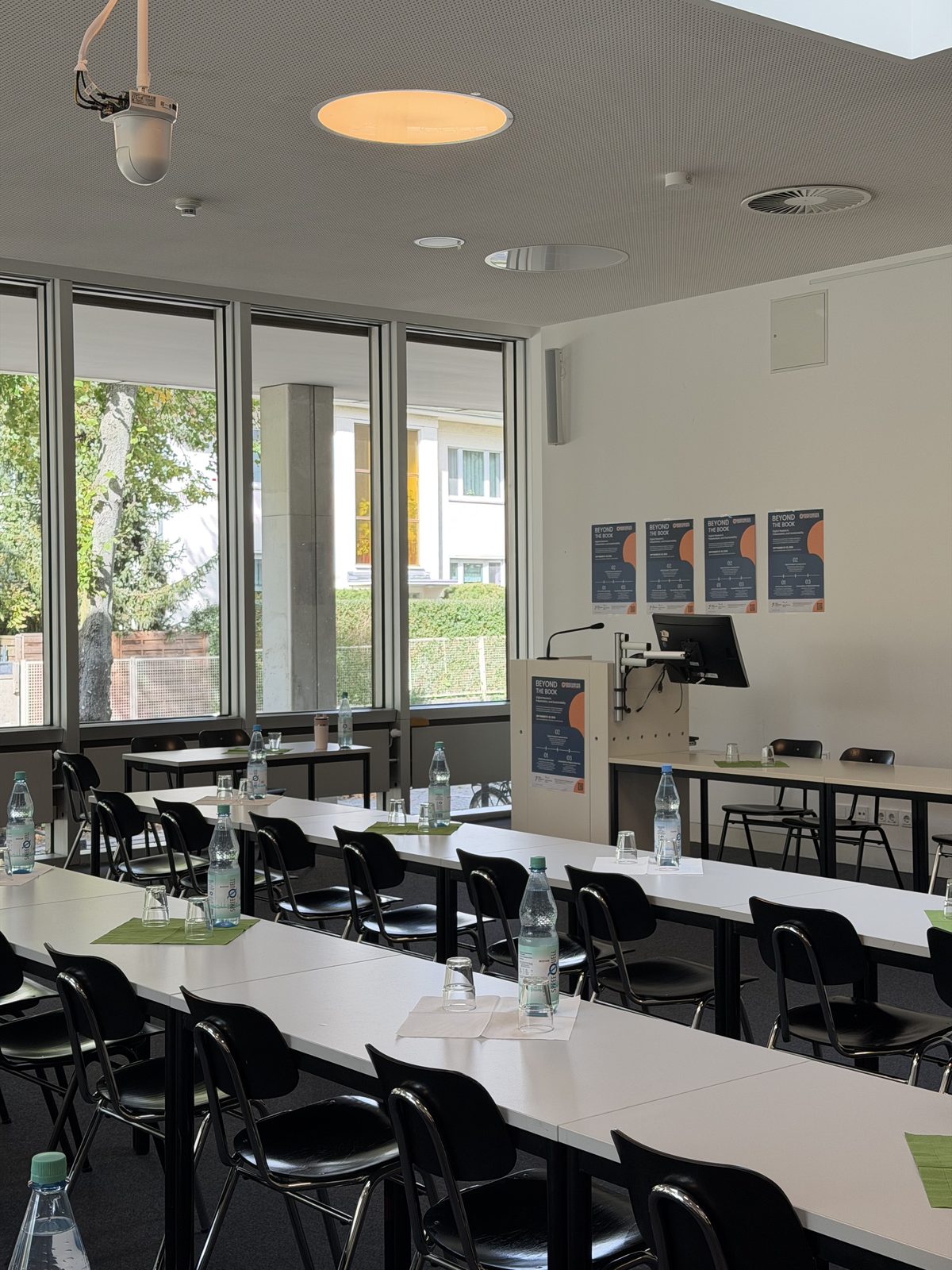
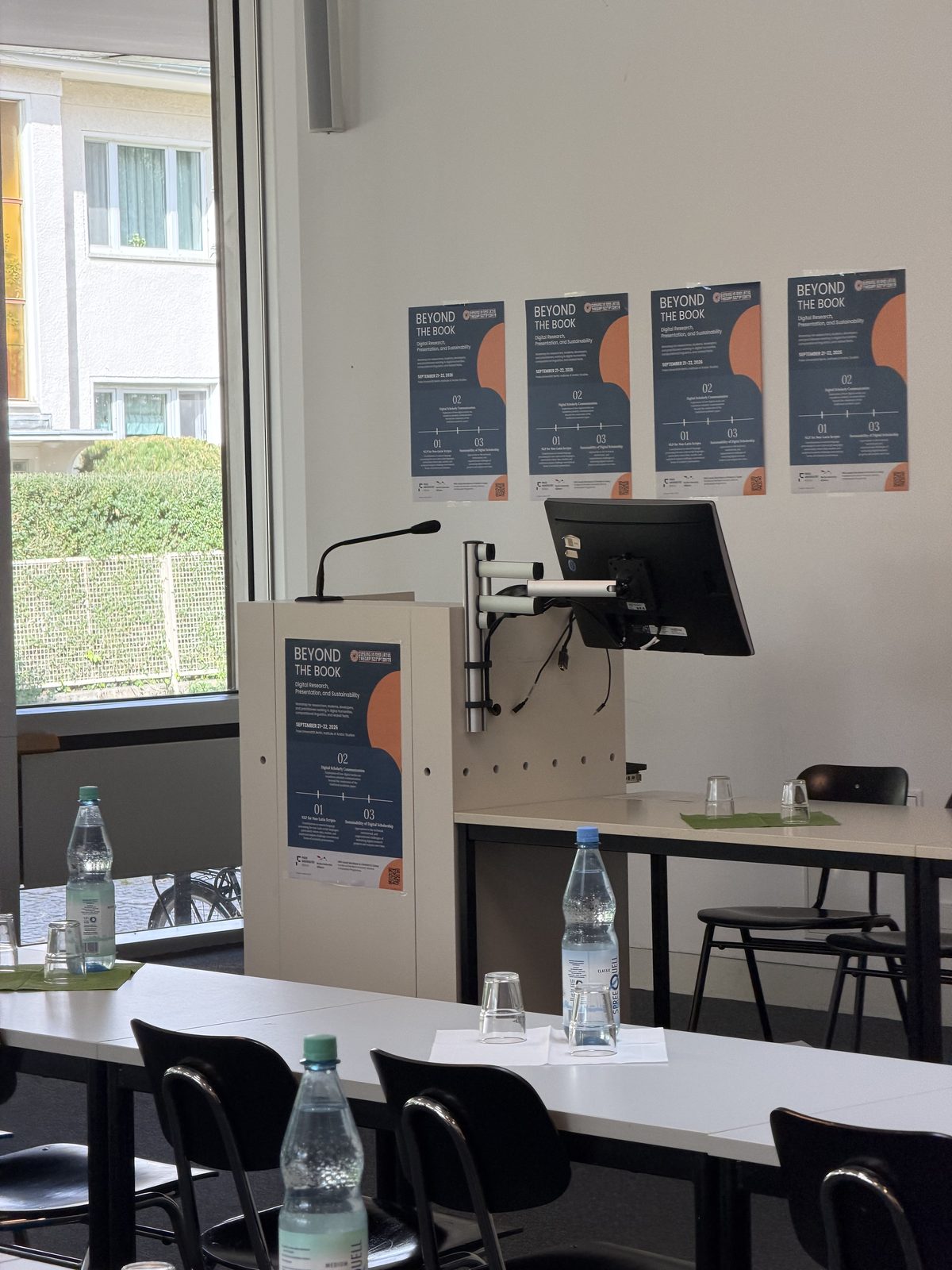
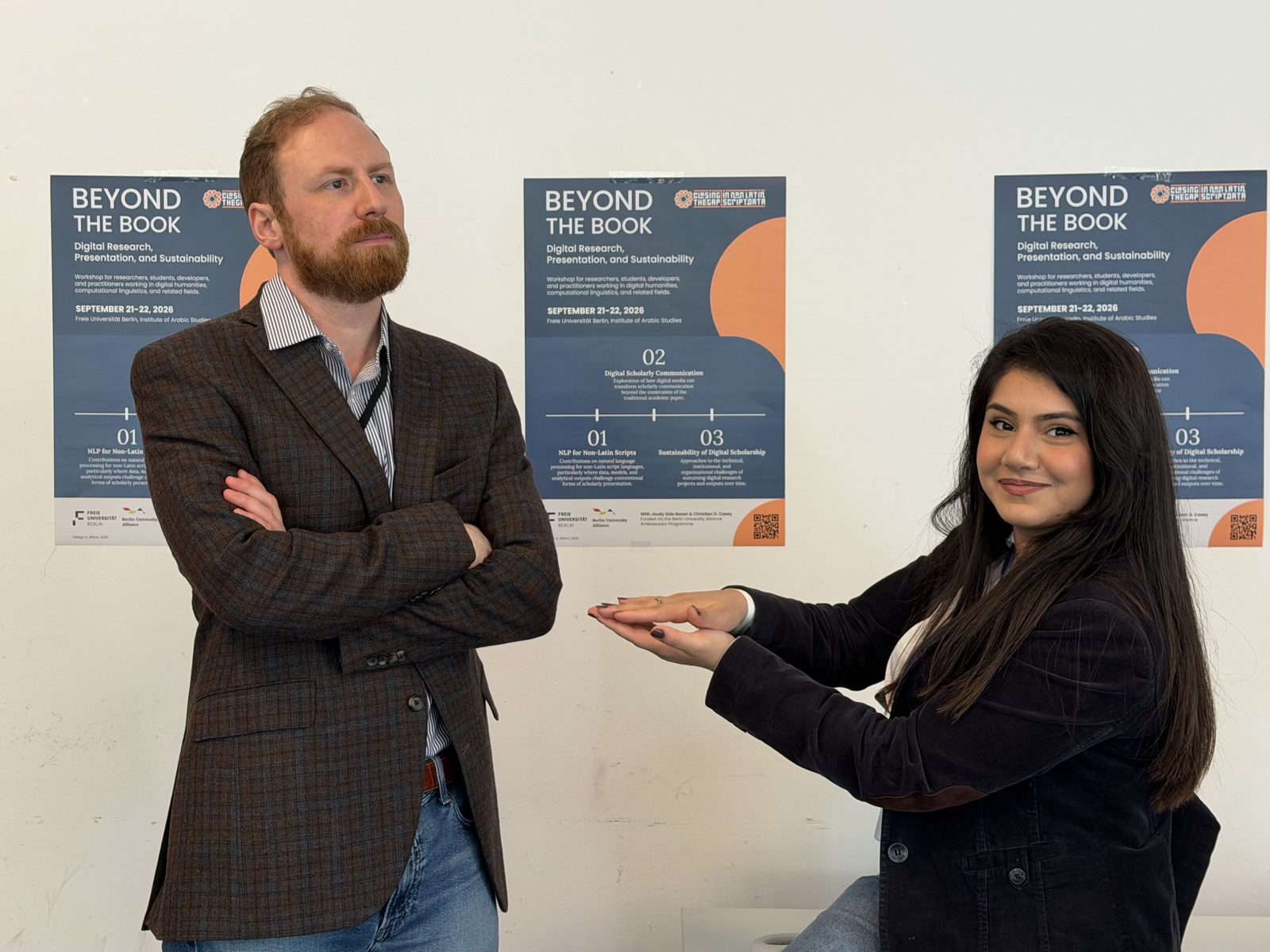
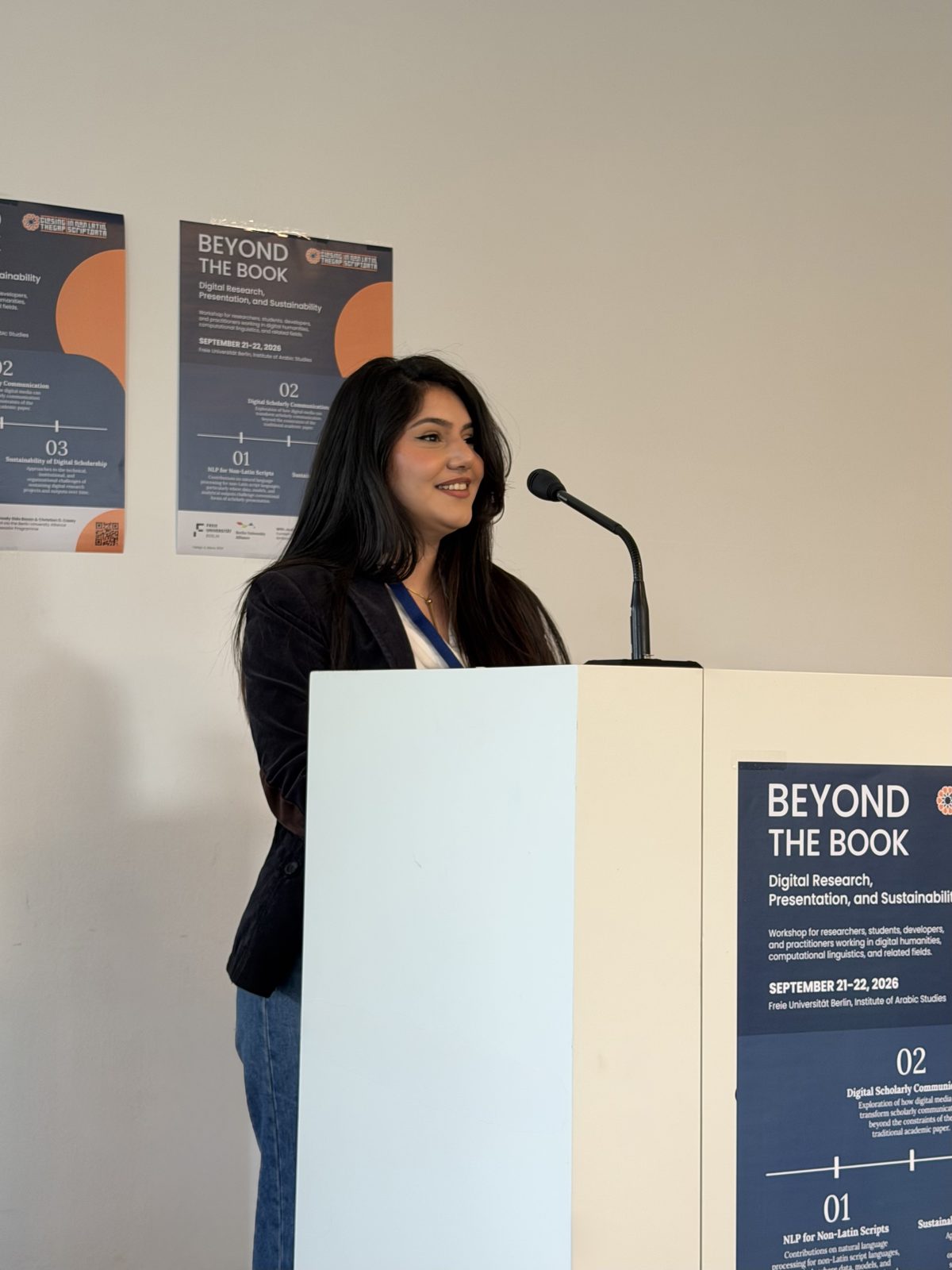
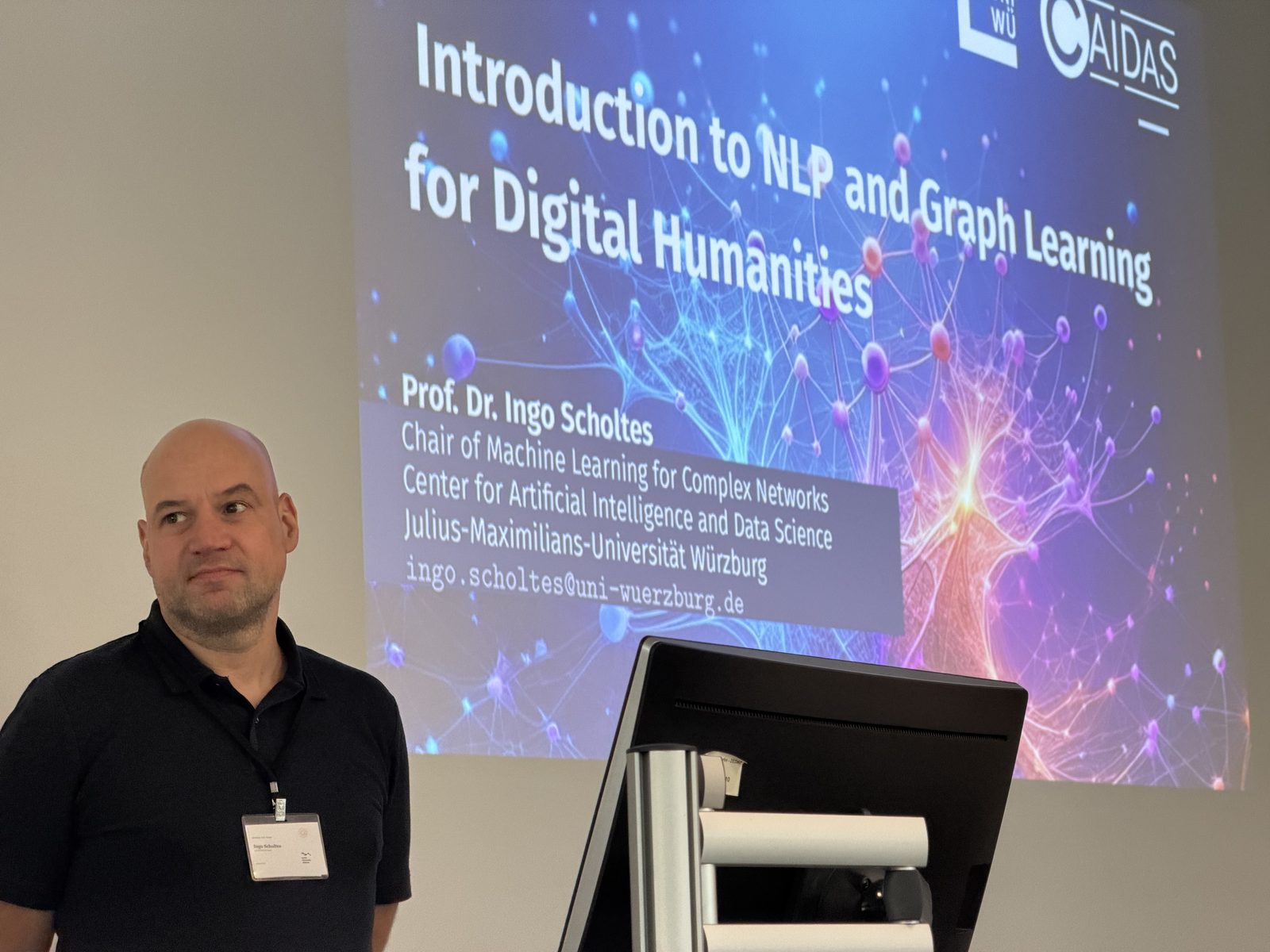
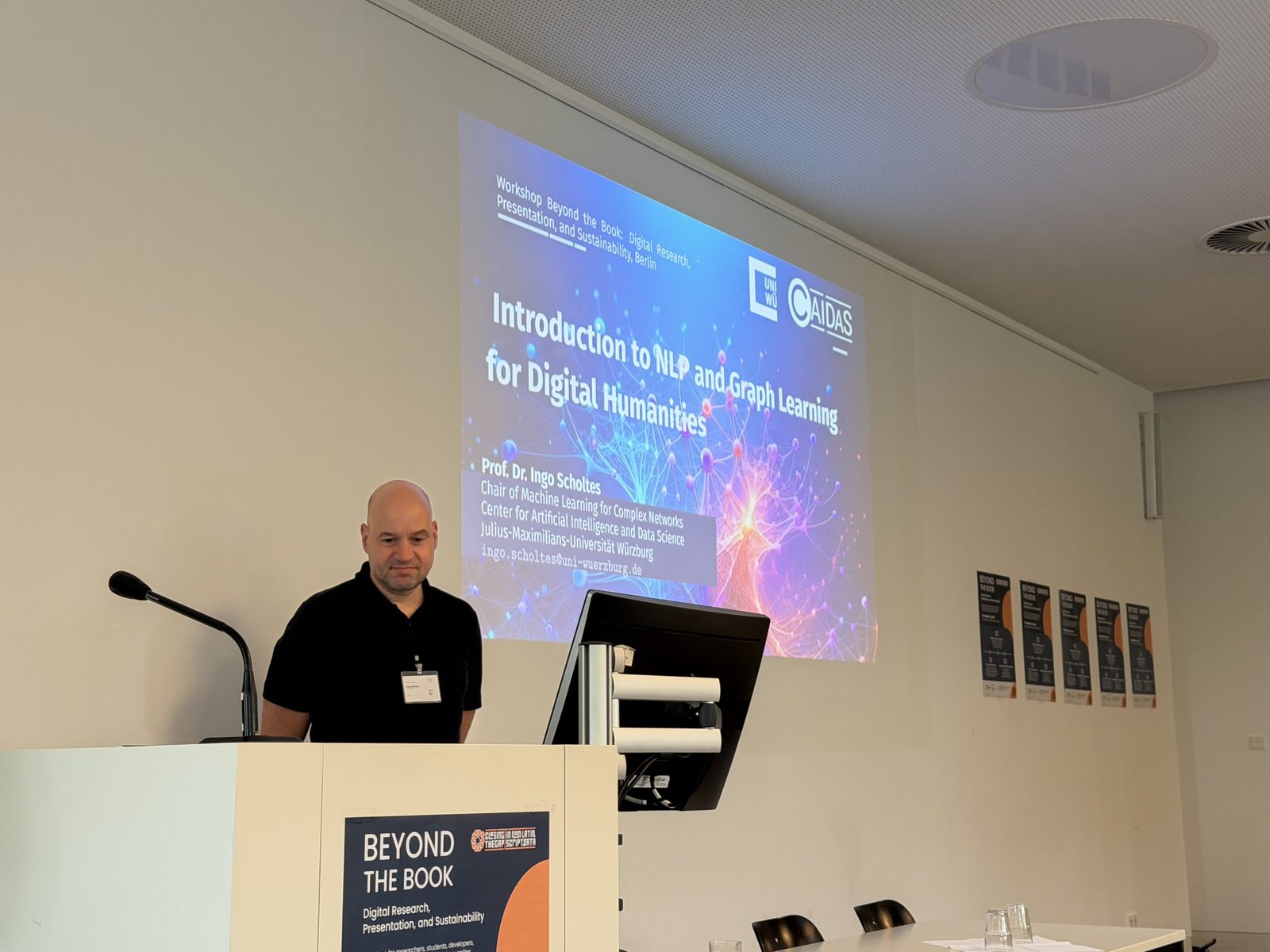
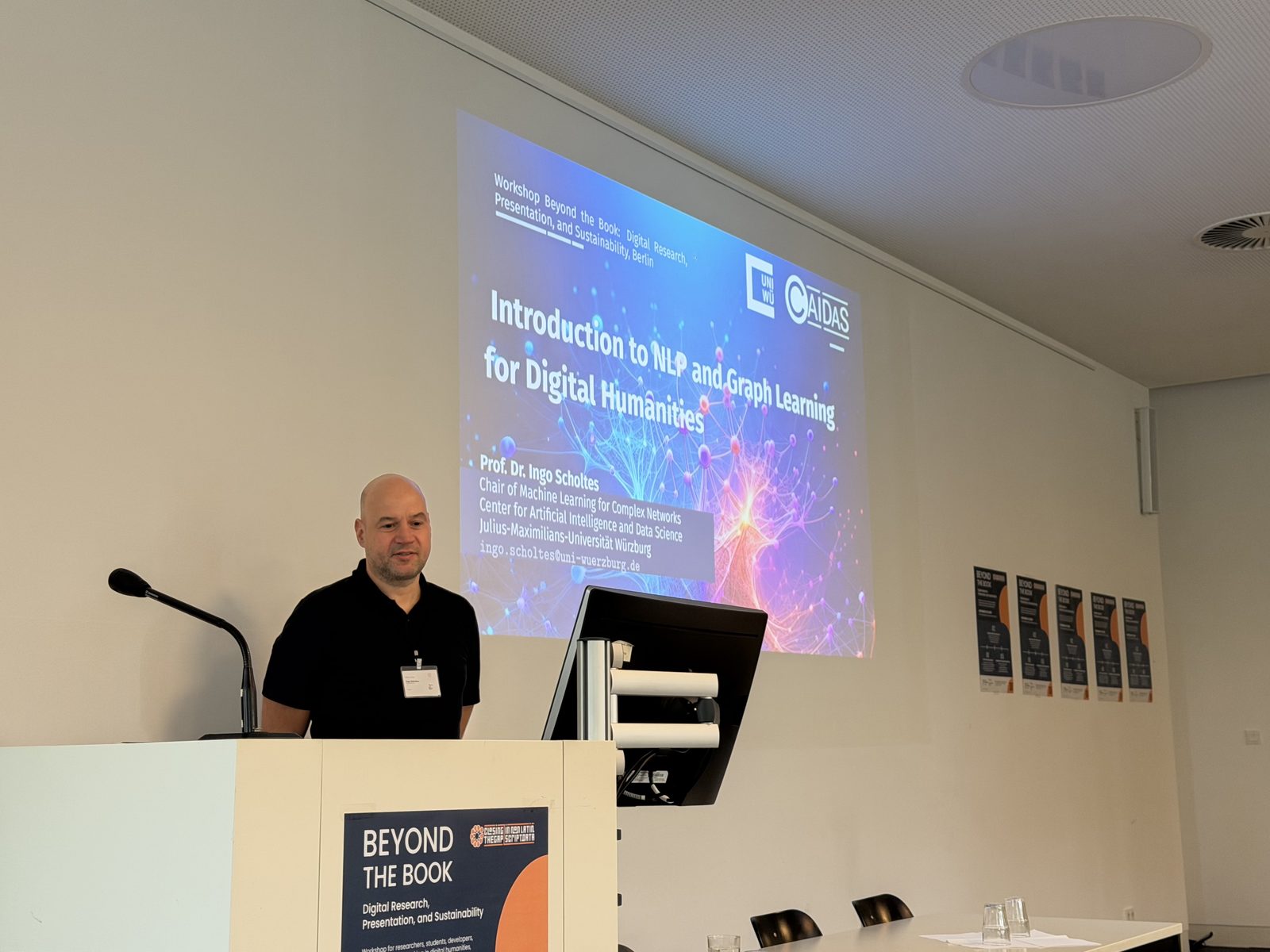
Check out the photos
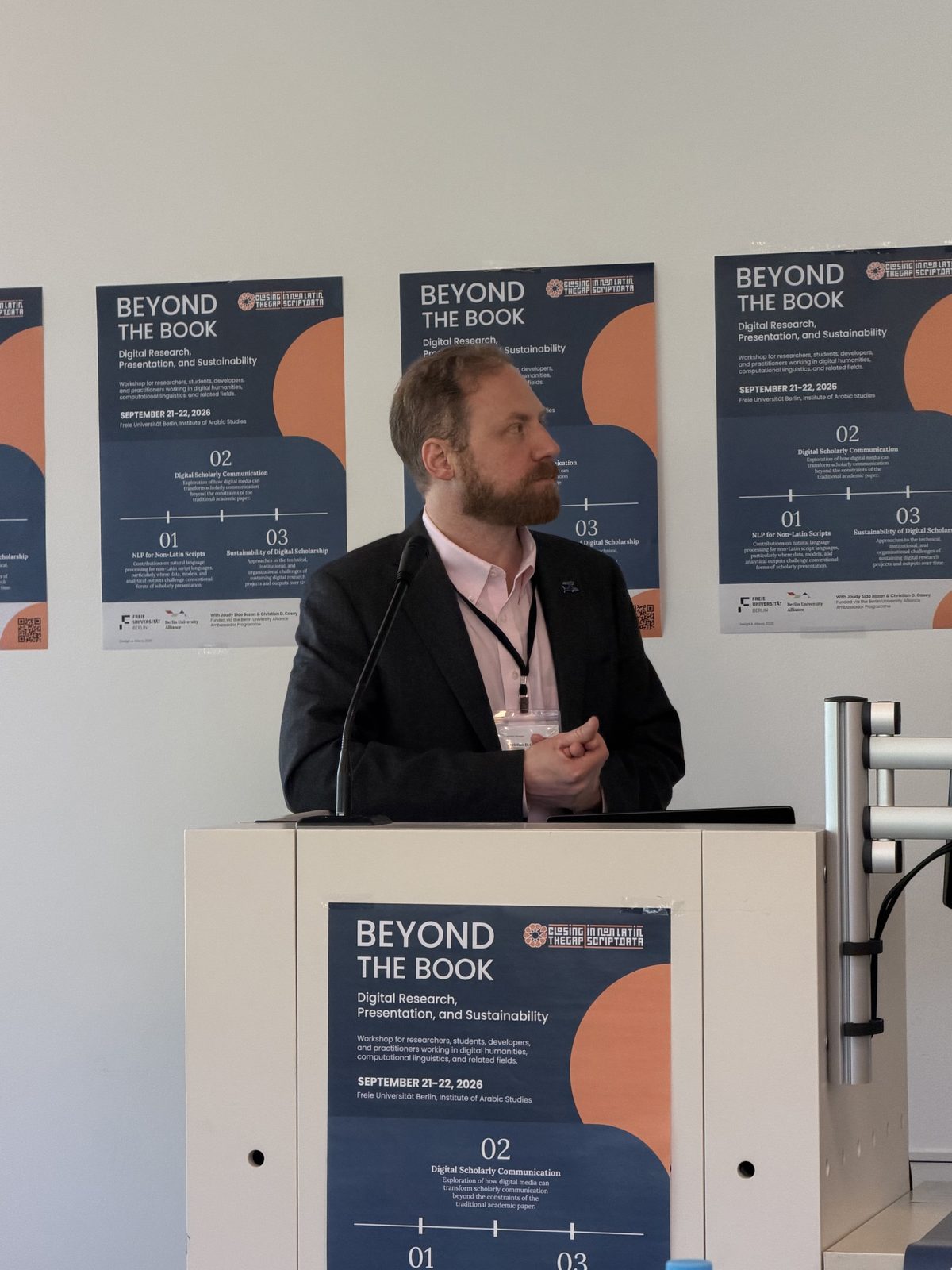
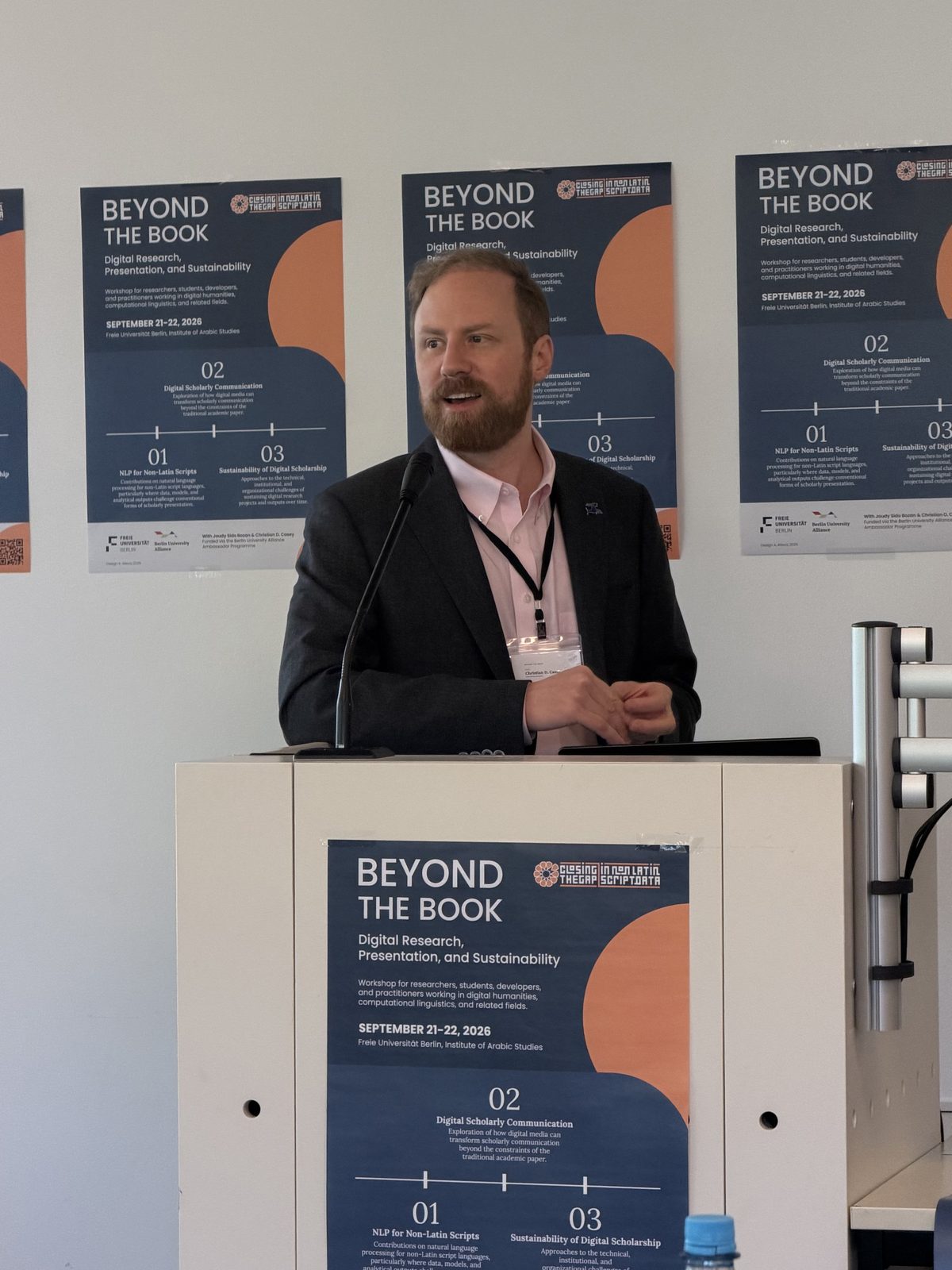
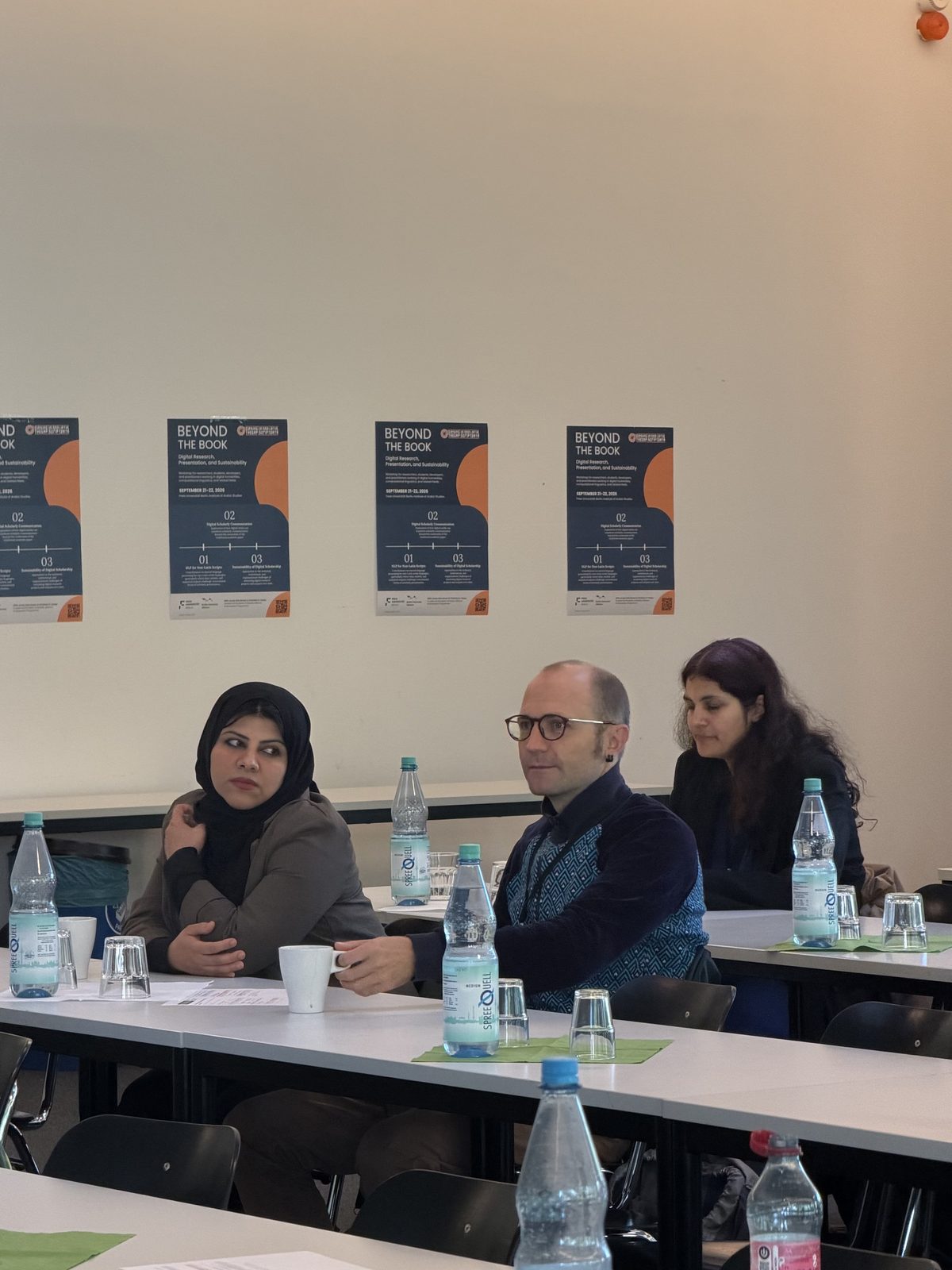
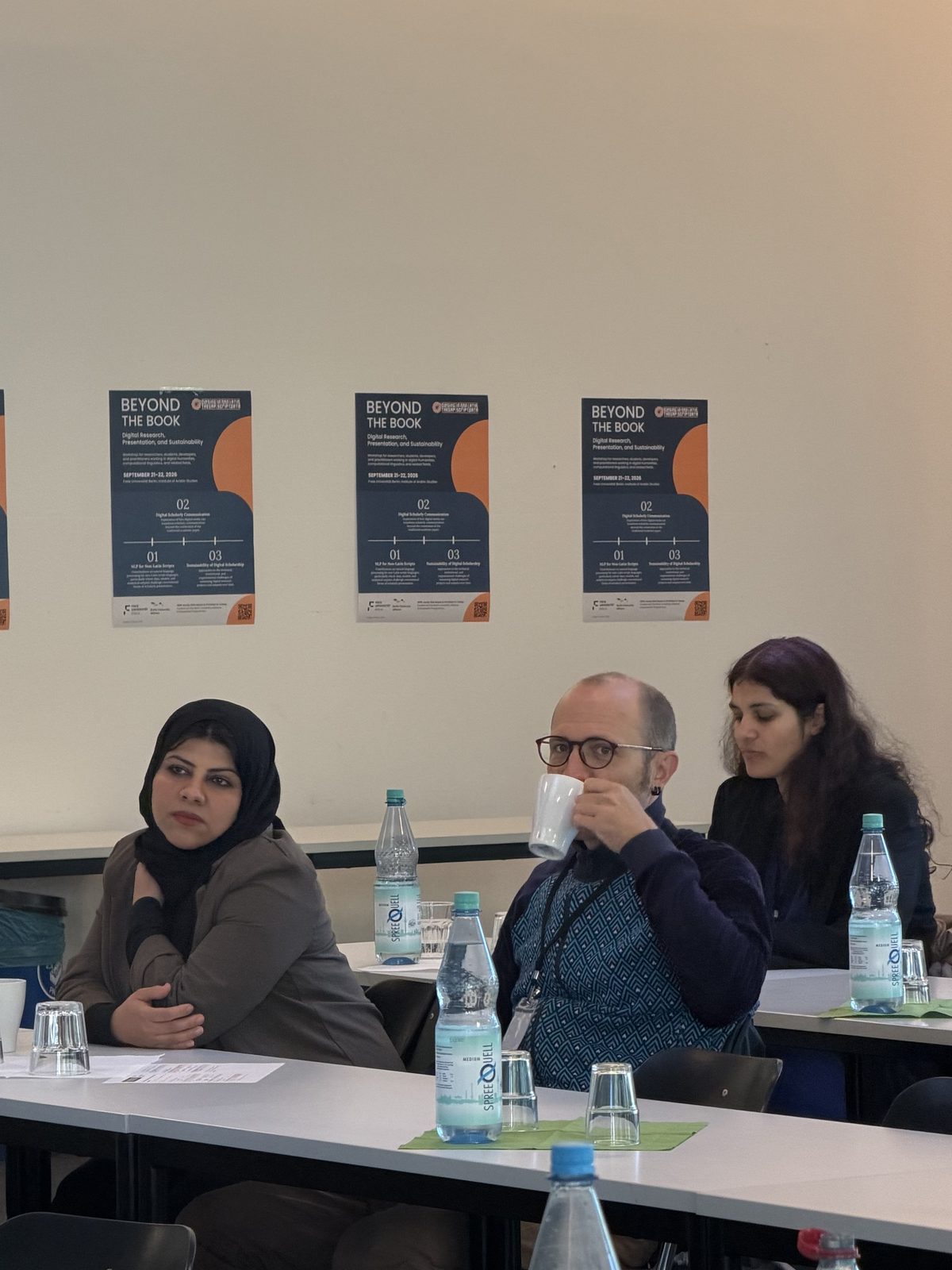
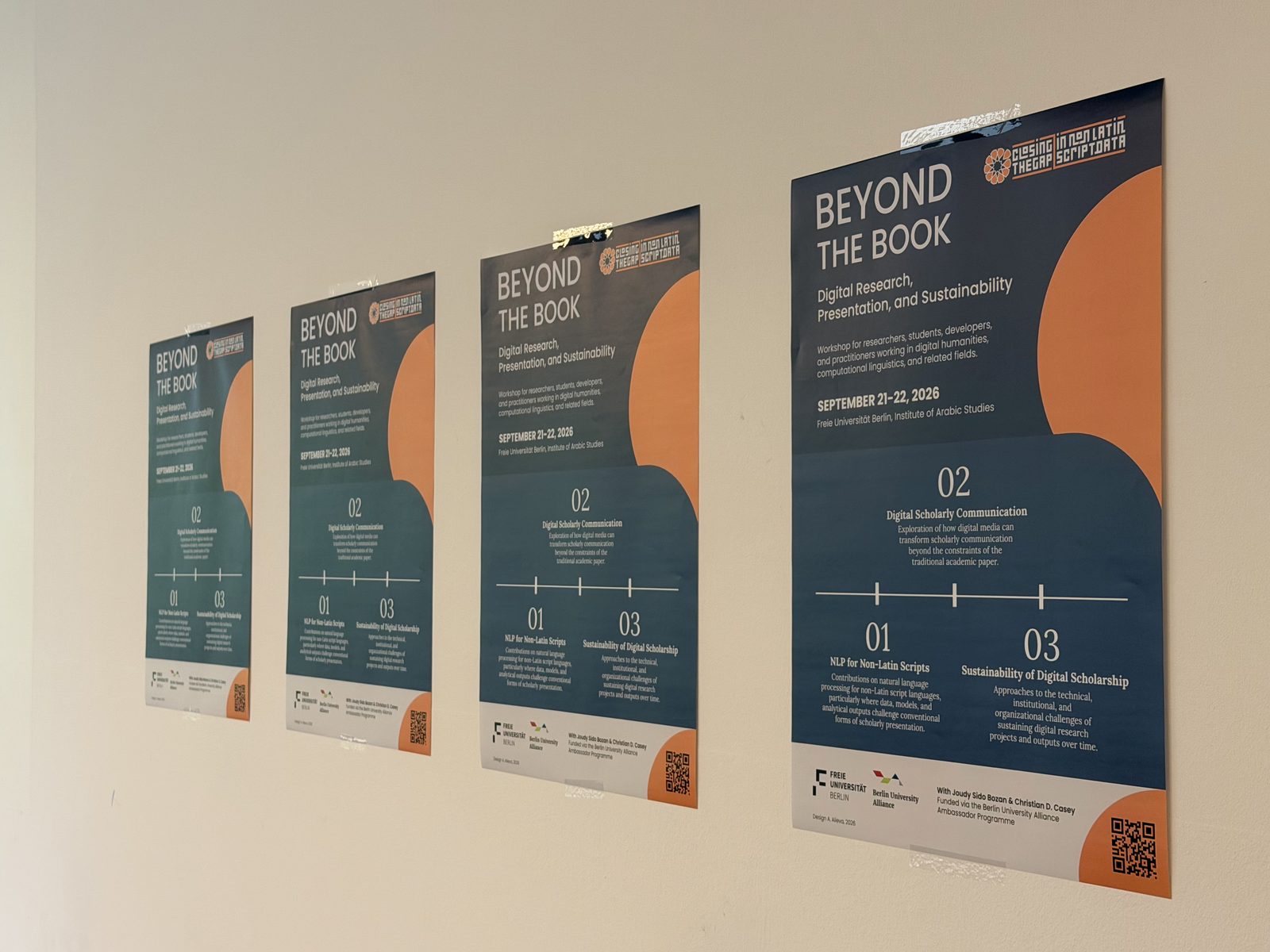
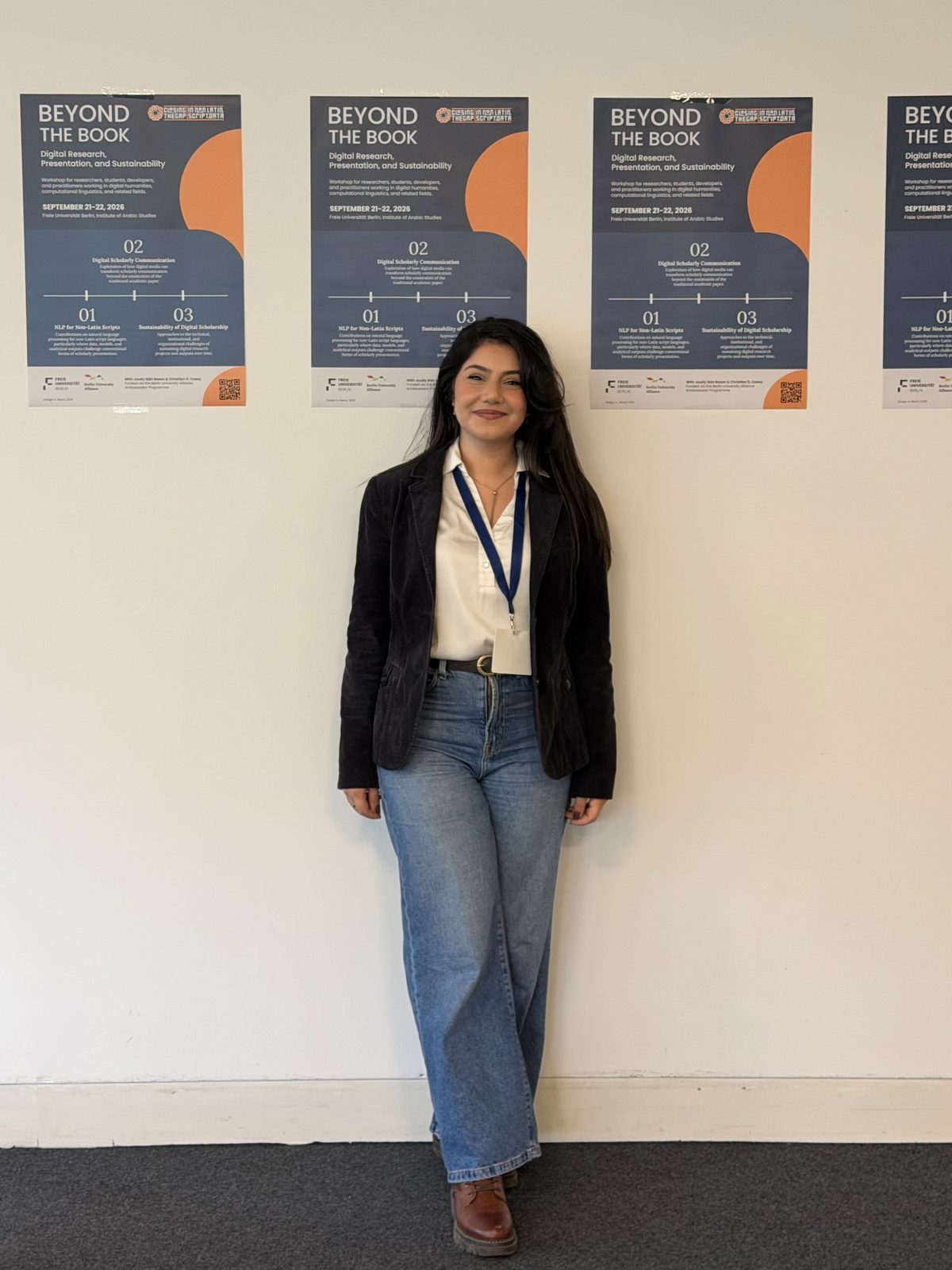
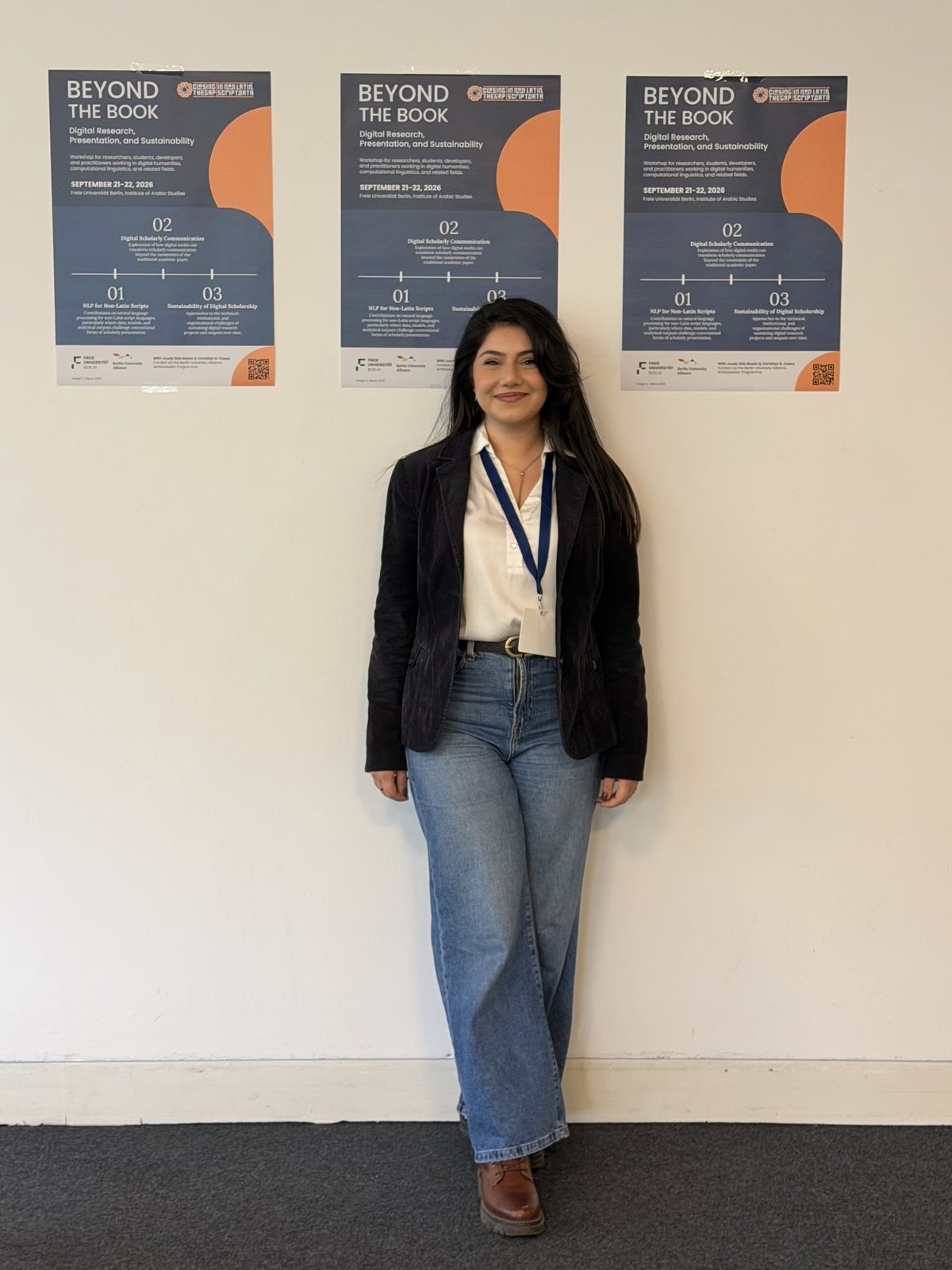
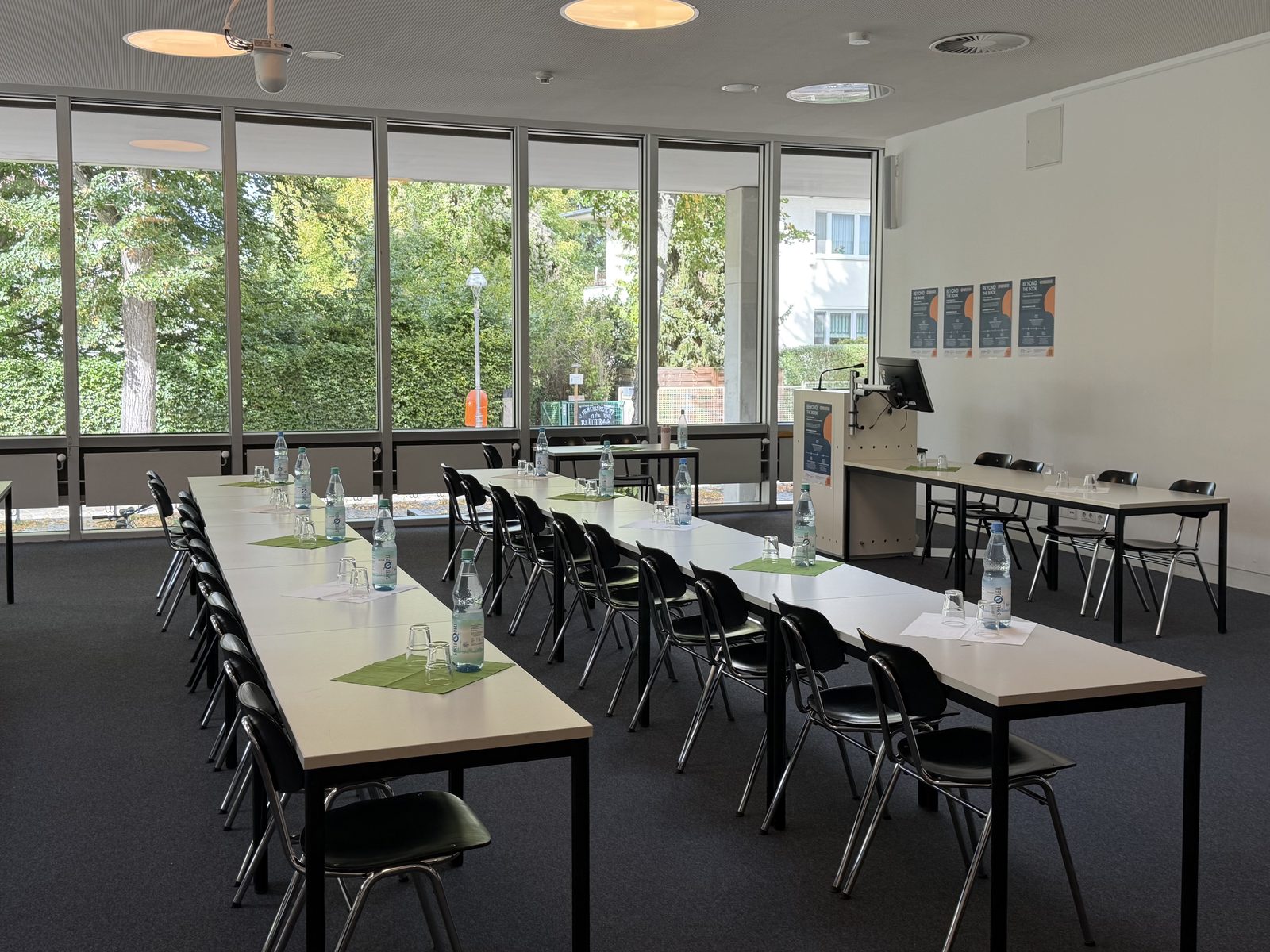
Programme
September 21–22, 2026
This 1.5-day workshop explores how digital research—particularly in the context of non-Latin script languages—can move beyond traditional scholarly formats by examining the complete research pipeline: production, presentation, and long-term sustainability.
The programme features three thematic sessions, each consisting of a keynote lecture, two invited talks, and a panel discussion:
- NLP for Non-Latin Scripts
- Digital Scholarly Communication
- Sustainability of Digital Scholarship
The workshop is held on site only at Freie Universität Berlin and will not be streamed or offered in a hybrid format.
Brought to you by the Berlin University Alliance (BUA) and organized by Joudy Sido Bozan and Christian D. Casey.
Registration is now closed
We have reached full capacity for the workshop. Thank you to everyone who registered. We look forward to welcoming our confirmed participants to Freie Universität Berlin. For any enquiries, please get in touch.
Workshop Programme
Select a session below, then open a talk to read its abstract.
Download programme (PDF)Day 1 · Monday, 21 September 2026
Session 1: NLP and Digital Research Methods
Natural language processing for non-Latin script languages, especially where the resulting data, models, or analytical outputs challenge conventional modes of scholarly presentation.
Registration & Welcome Coffee
Arrival and informal networking
Opening Remarks
Introduction to the workshop aims, themes, and programme
Prof. Dr. Ingo Scholtes
Machine Learning for Complex Networks, Center for Artificial Intelligence and Data Science (CAIDAS), Julius-Maximilians-Universität Würzburg
Introduced by Prof. Dr. Hubert Mara · followed by questions & discussion
View profileCoffee break
Panel Discussion — NLP
Scholtes, Farooq, and Pöckelmann
Venue
Freie Universität Berlin
Seminarzentrum L116
Otto-von-Simson-Straße 26
14195 Berlin, Germany
Funding
The event is funded by the Open Science Ambassador-Program of the Berlin University Alliance.